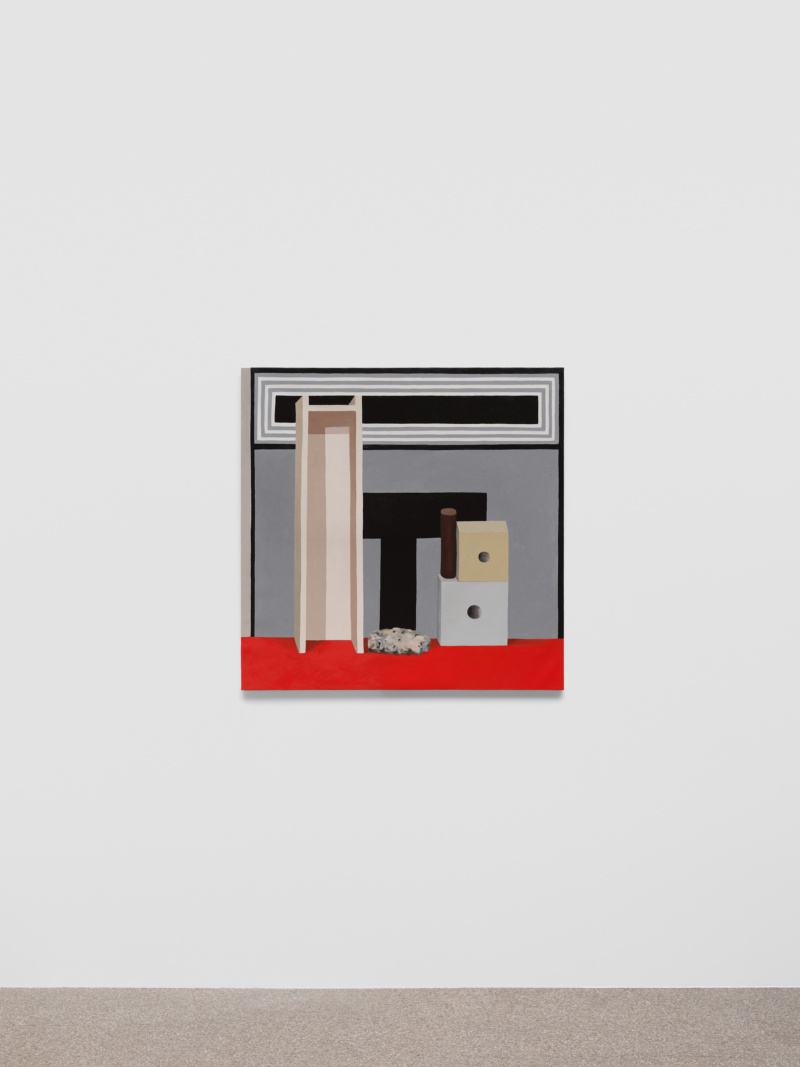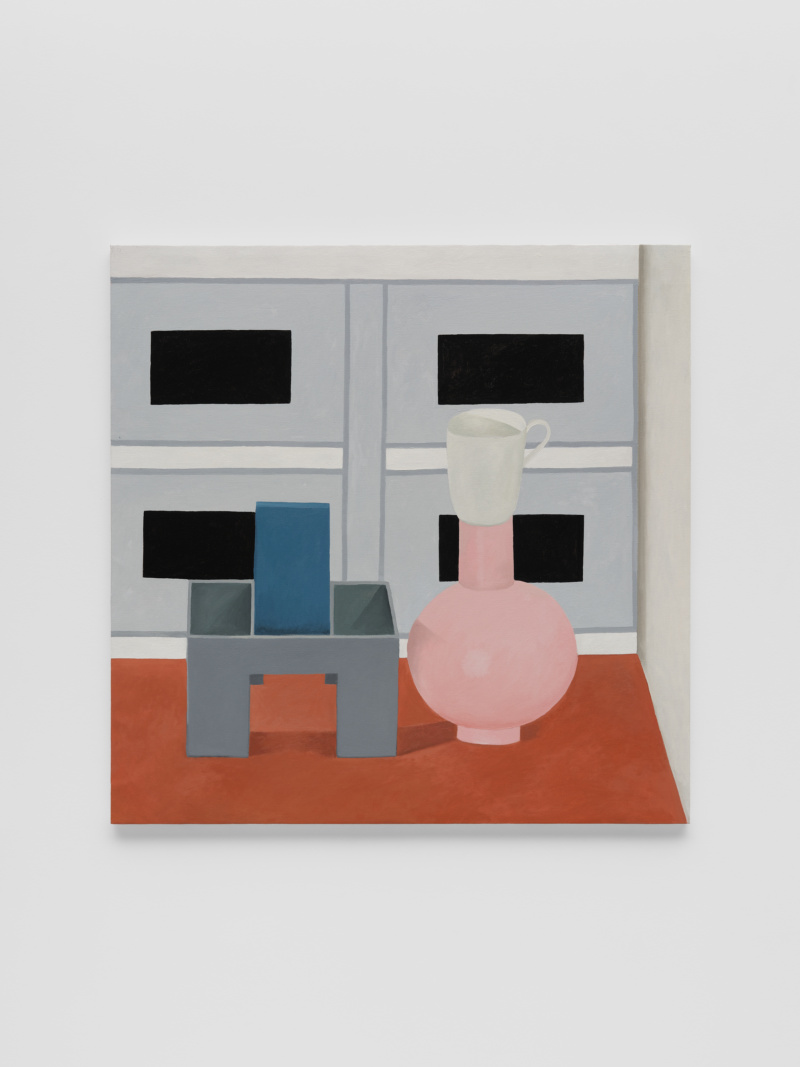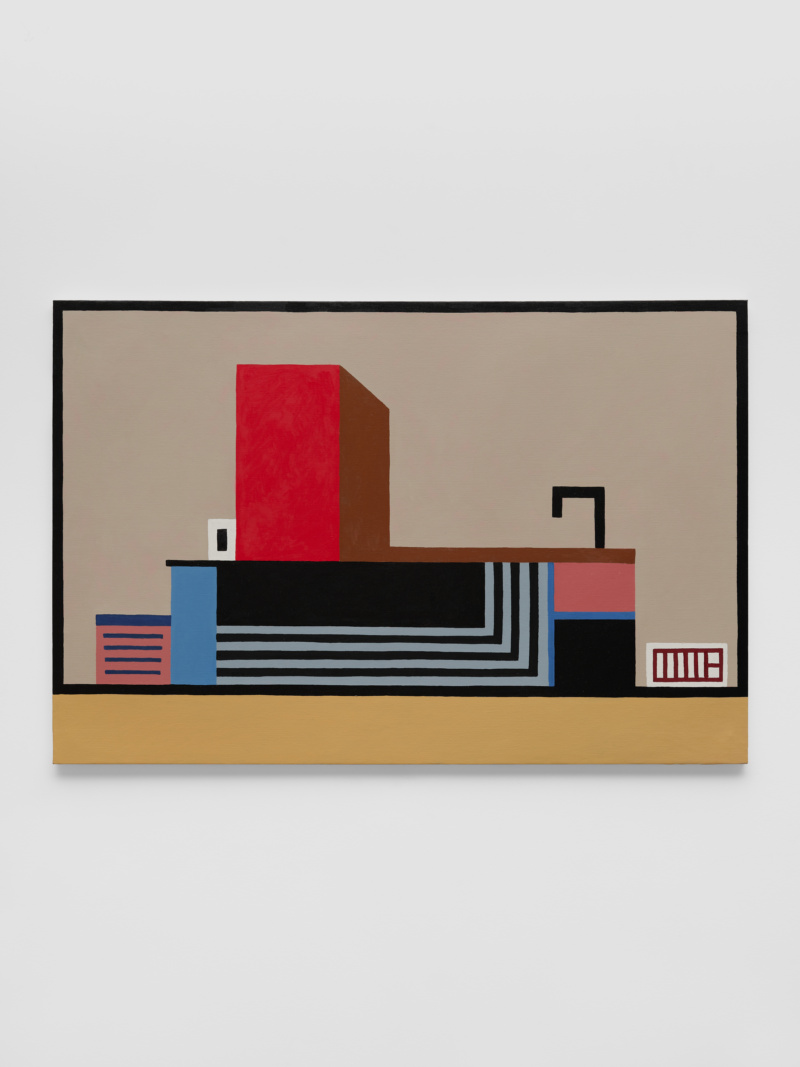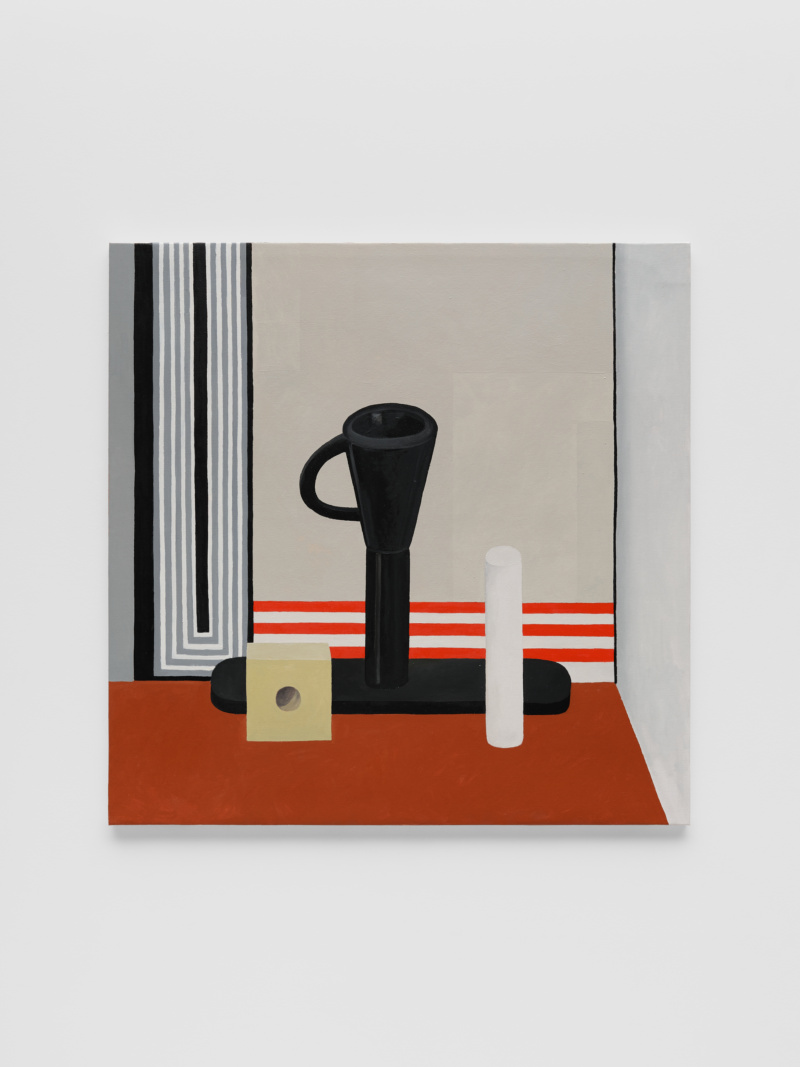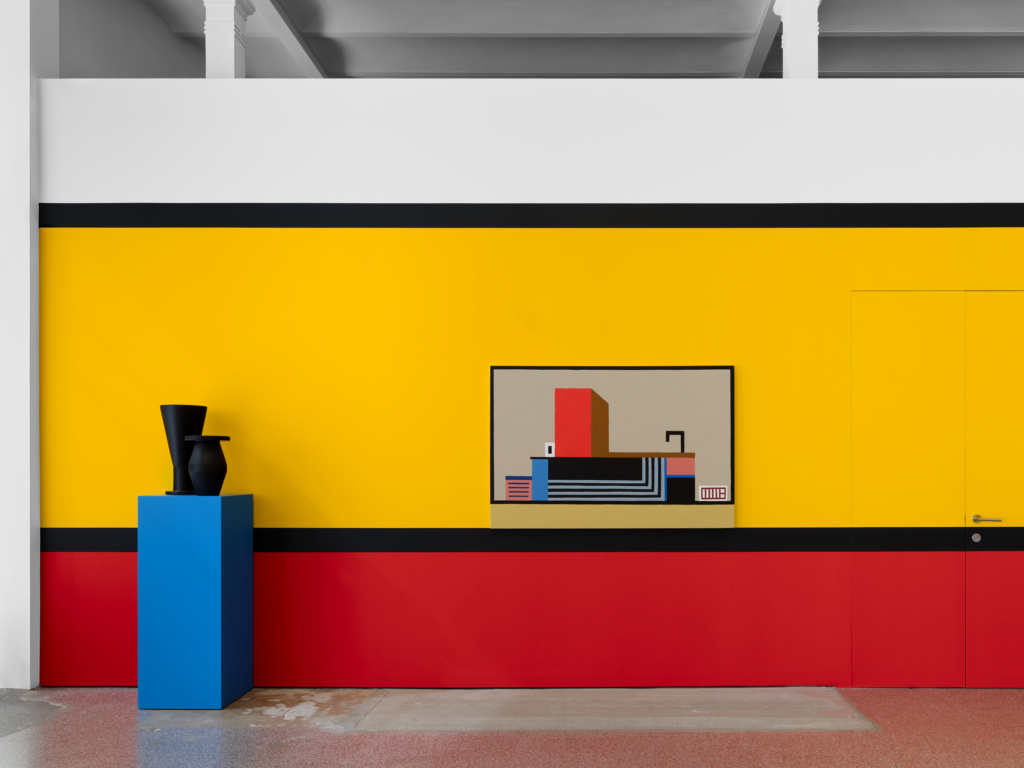
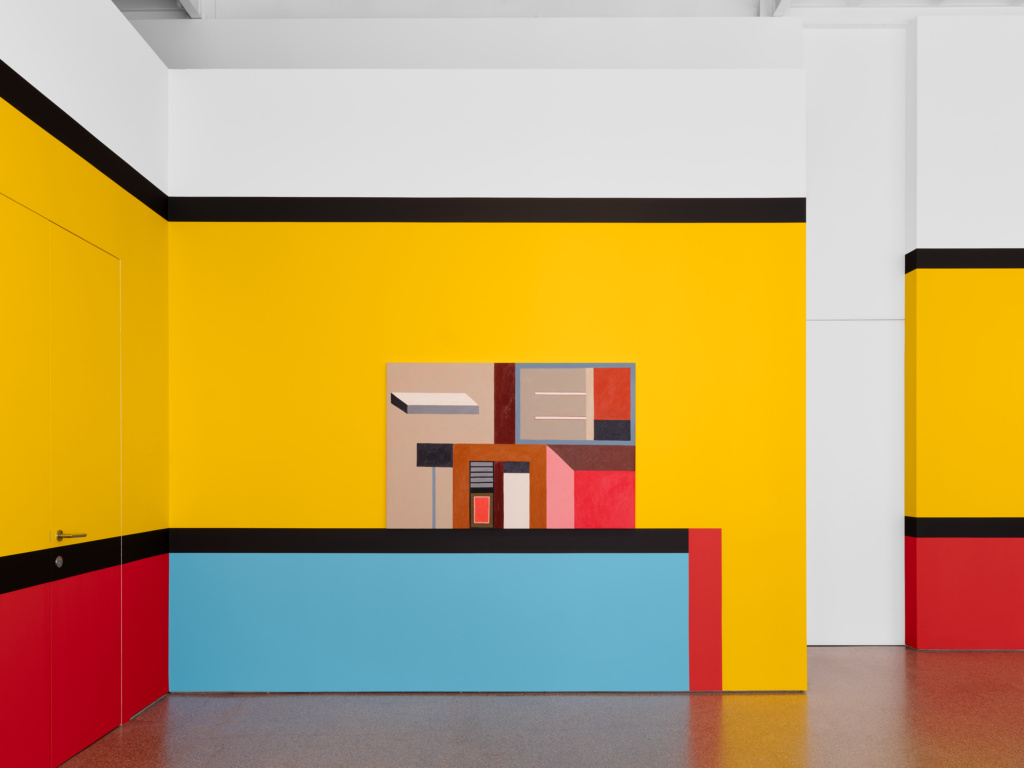
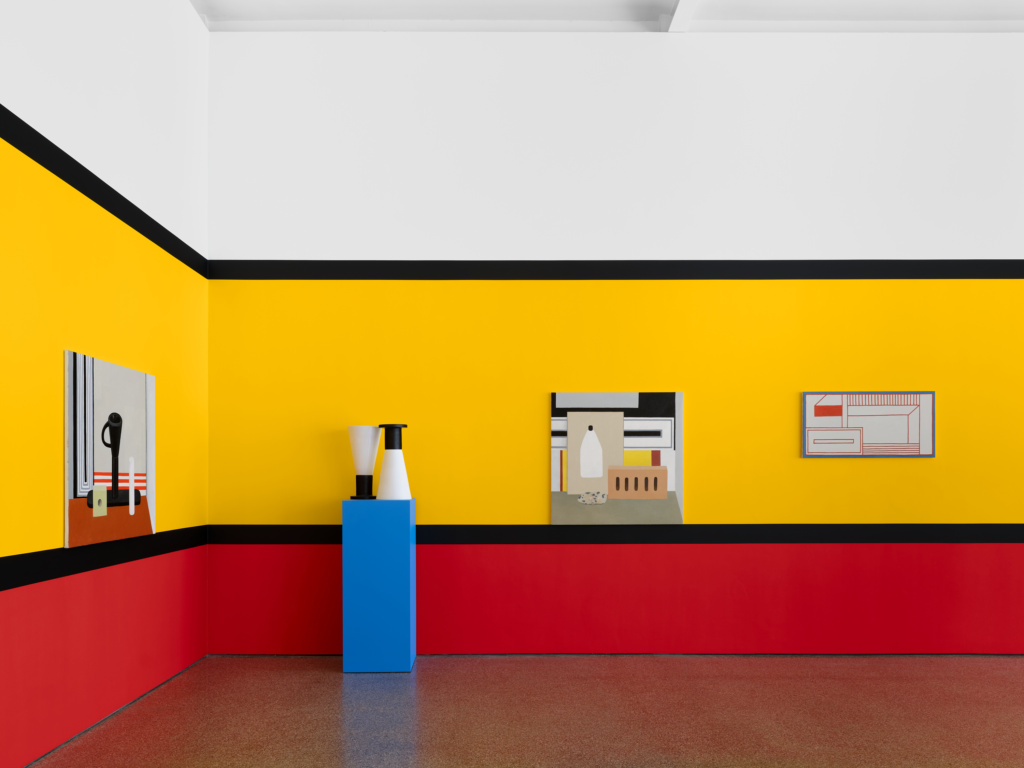
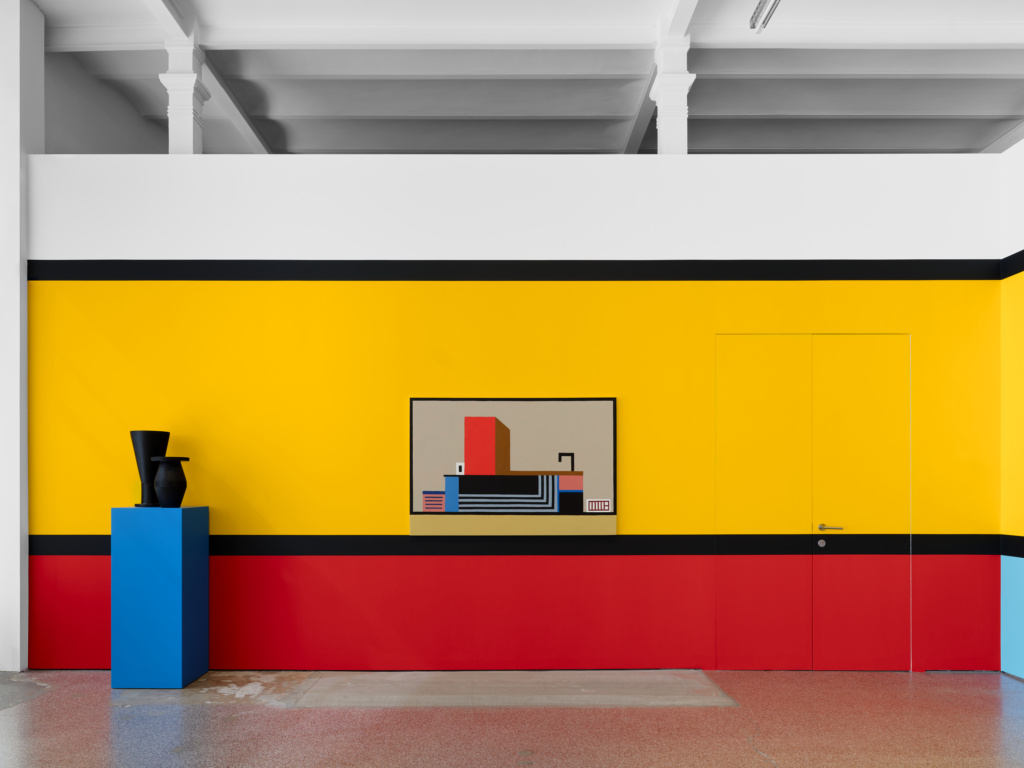
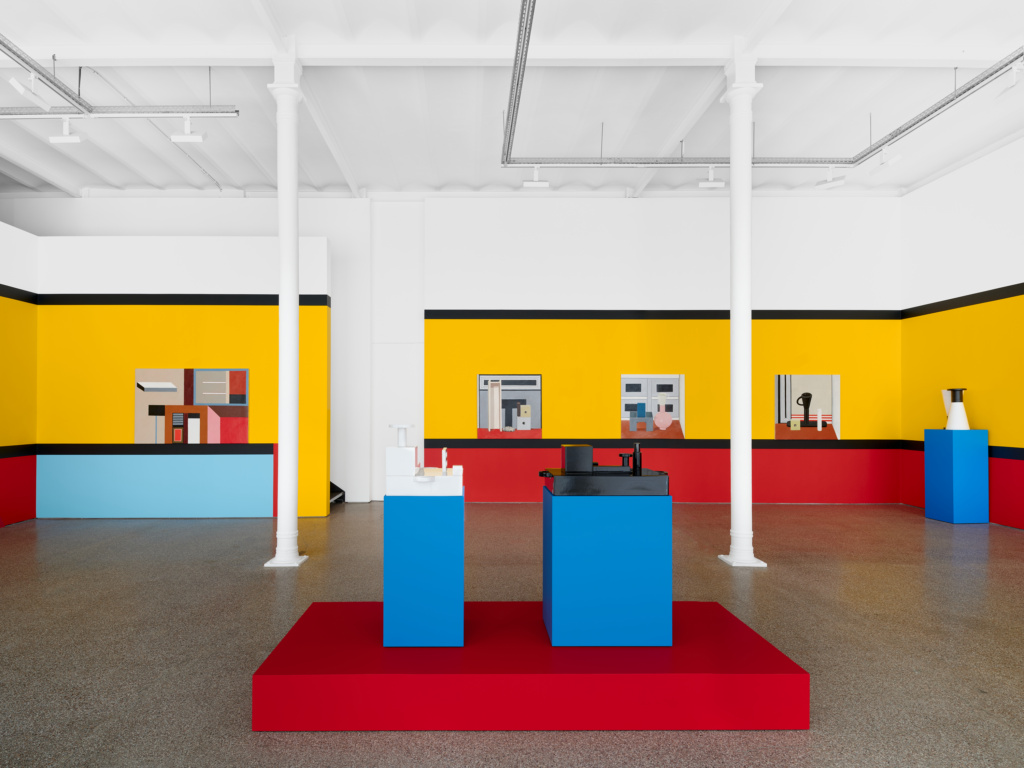
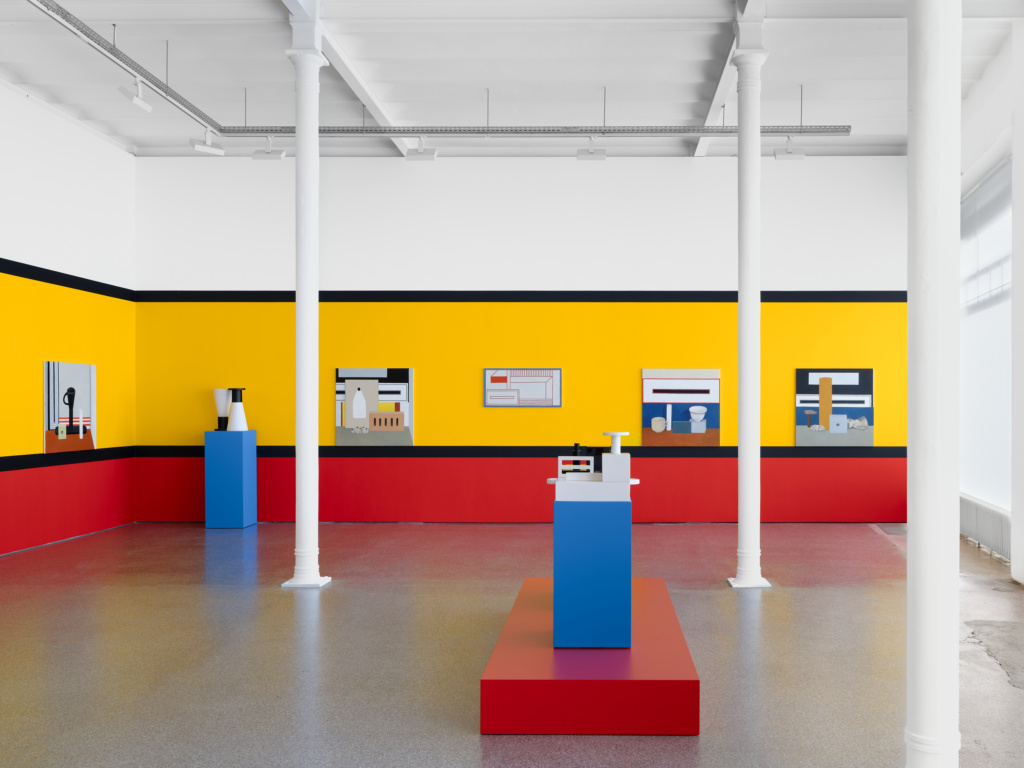
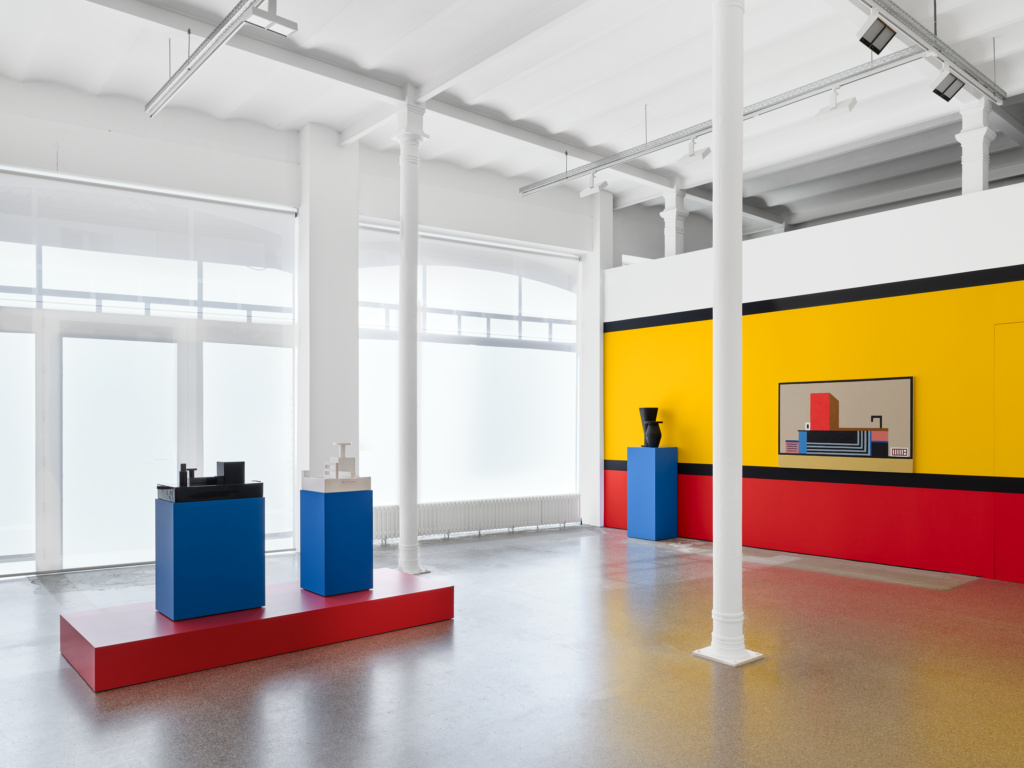
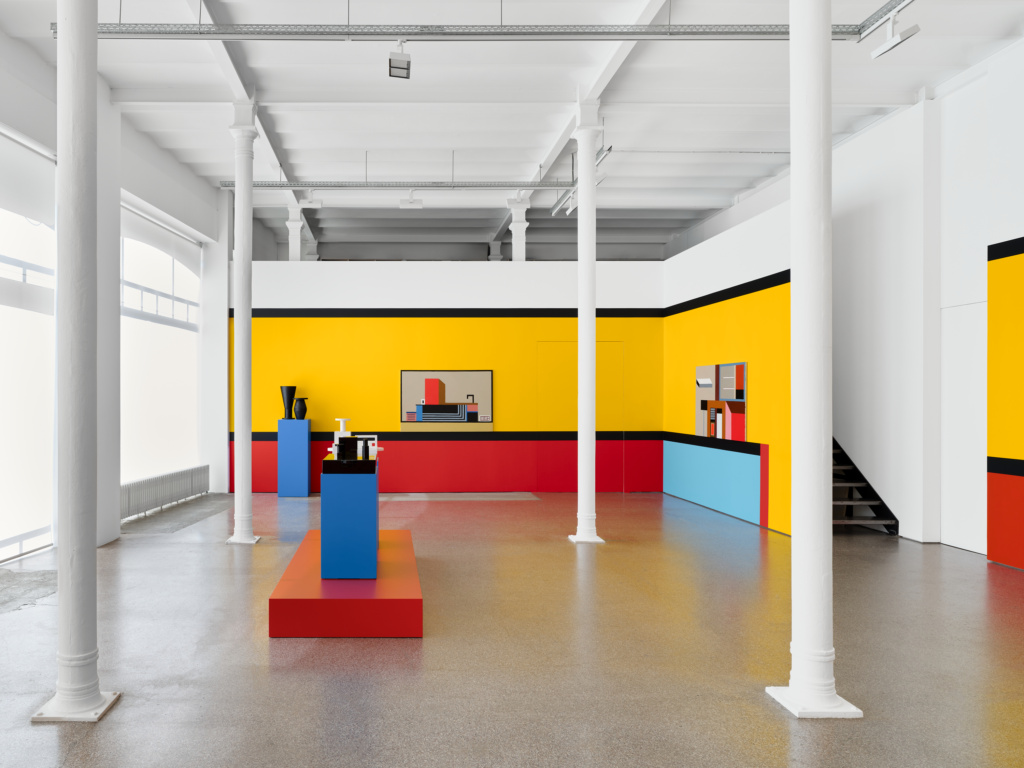
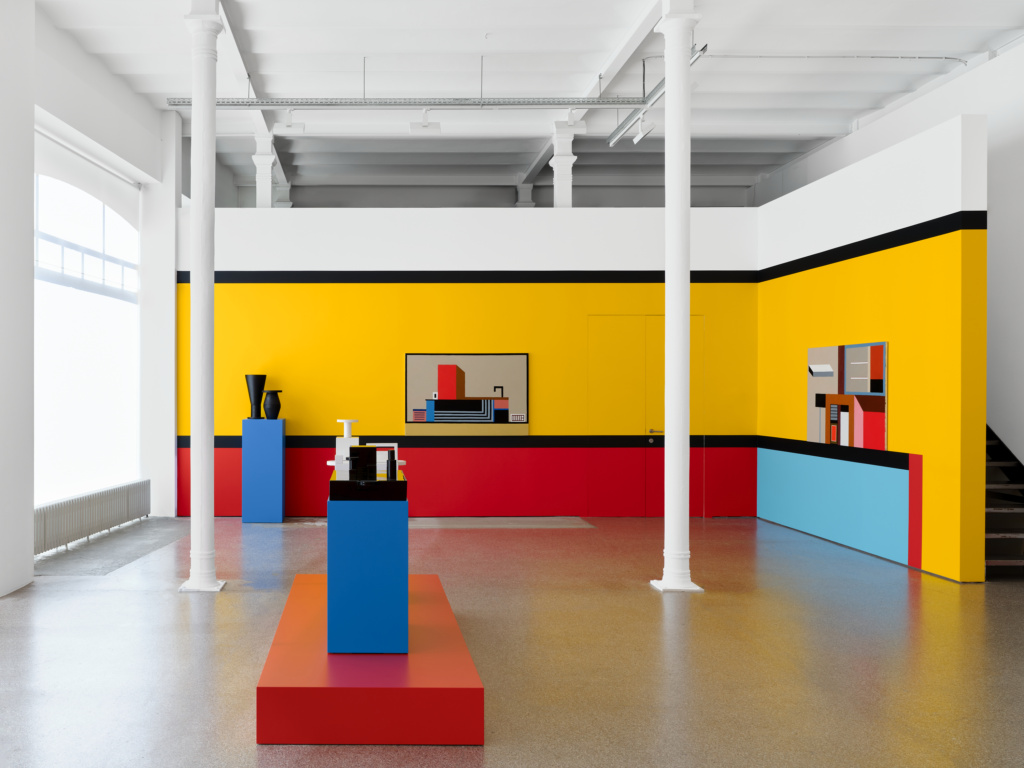
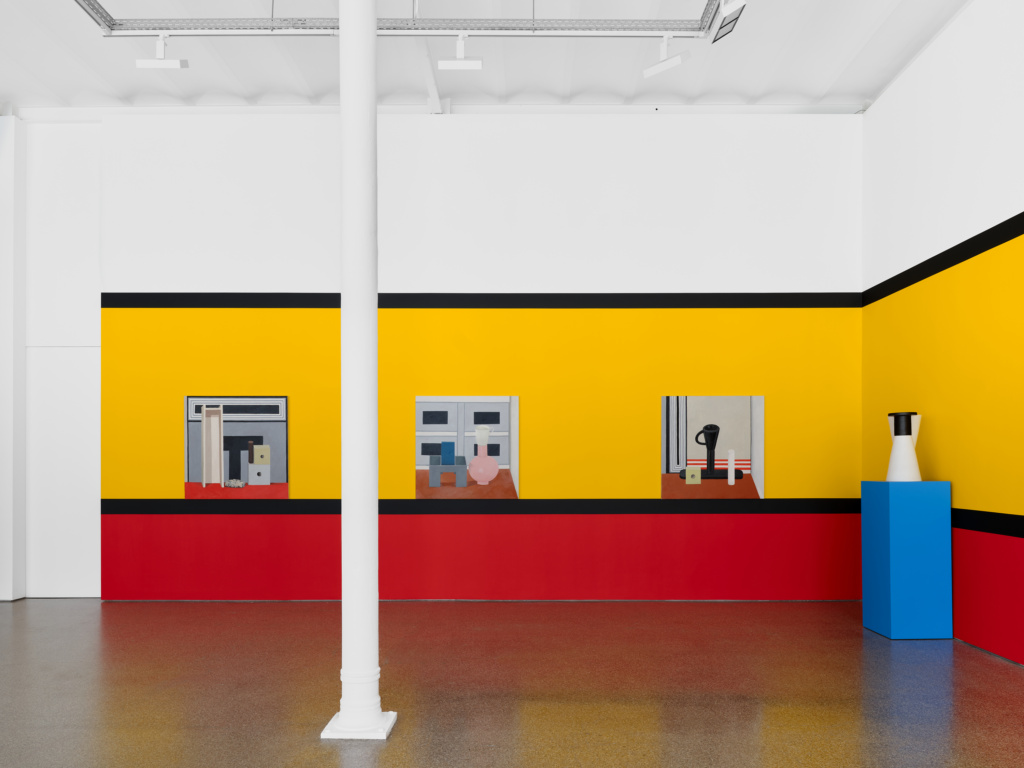

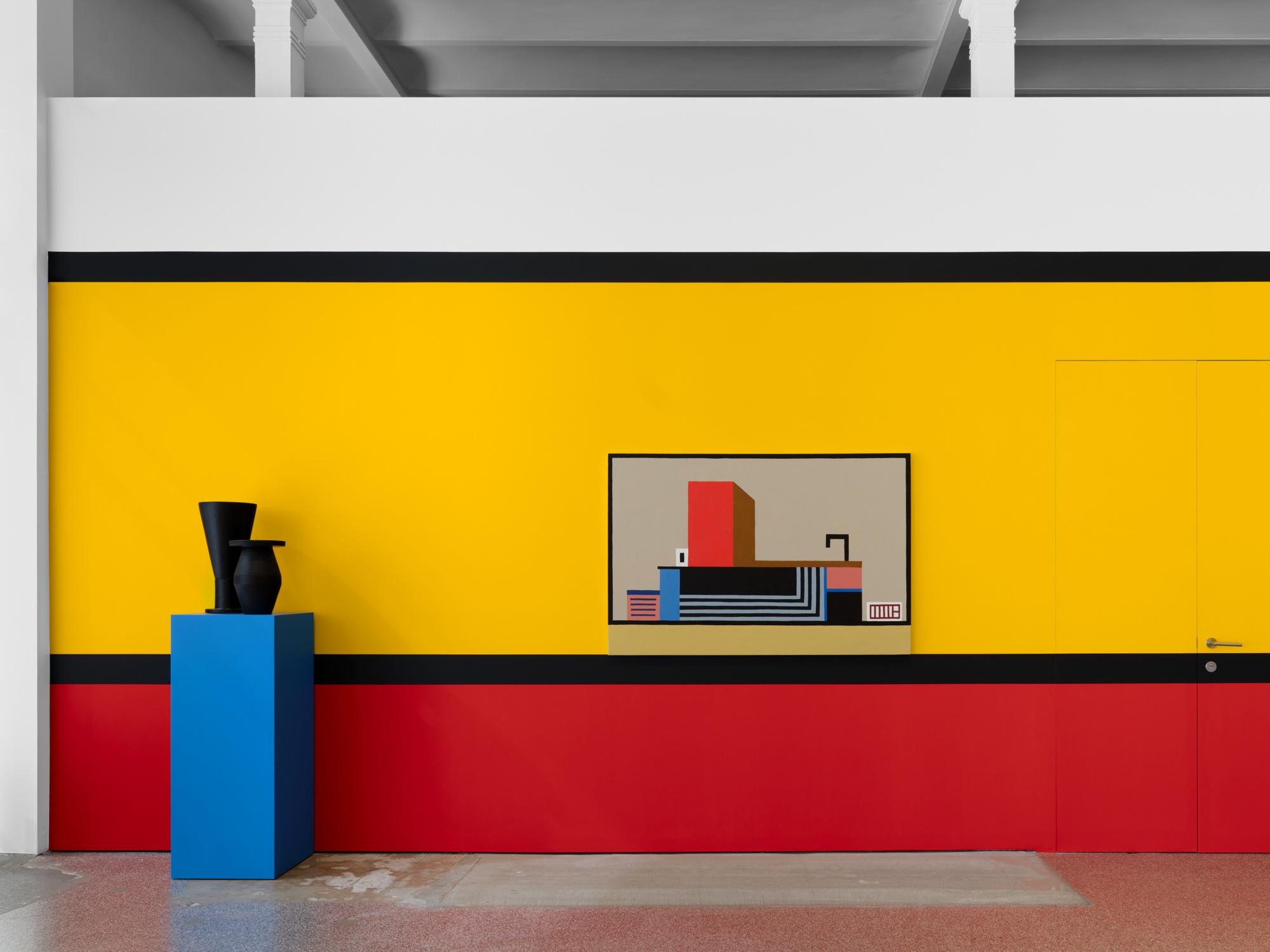
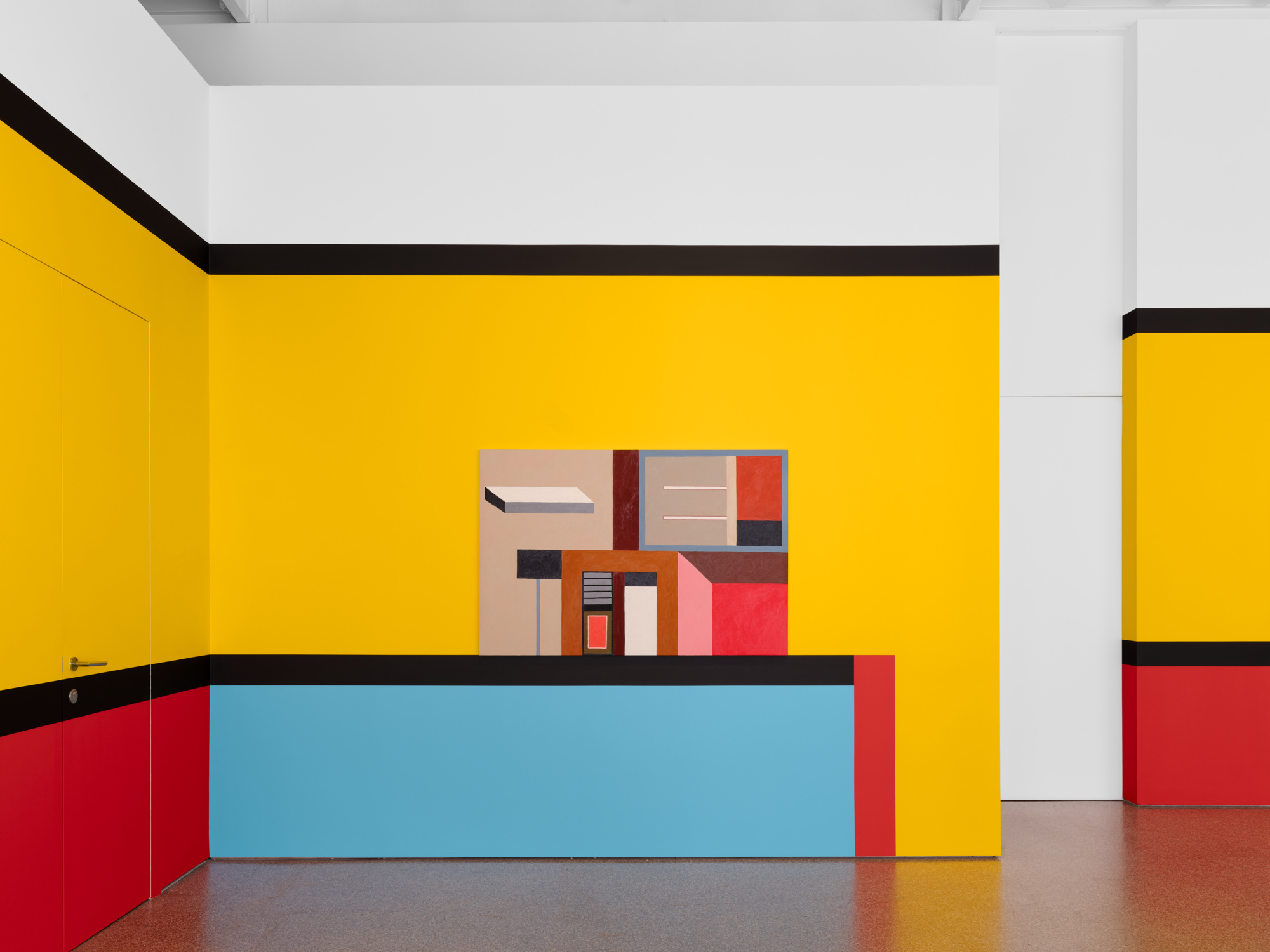
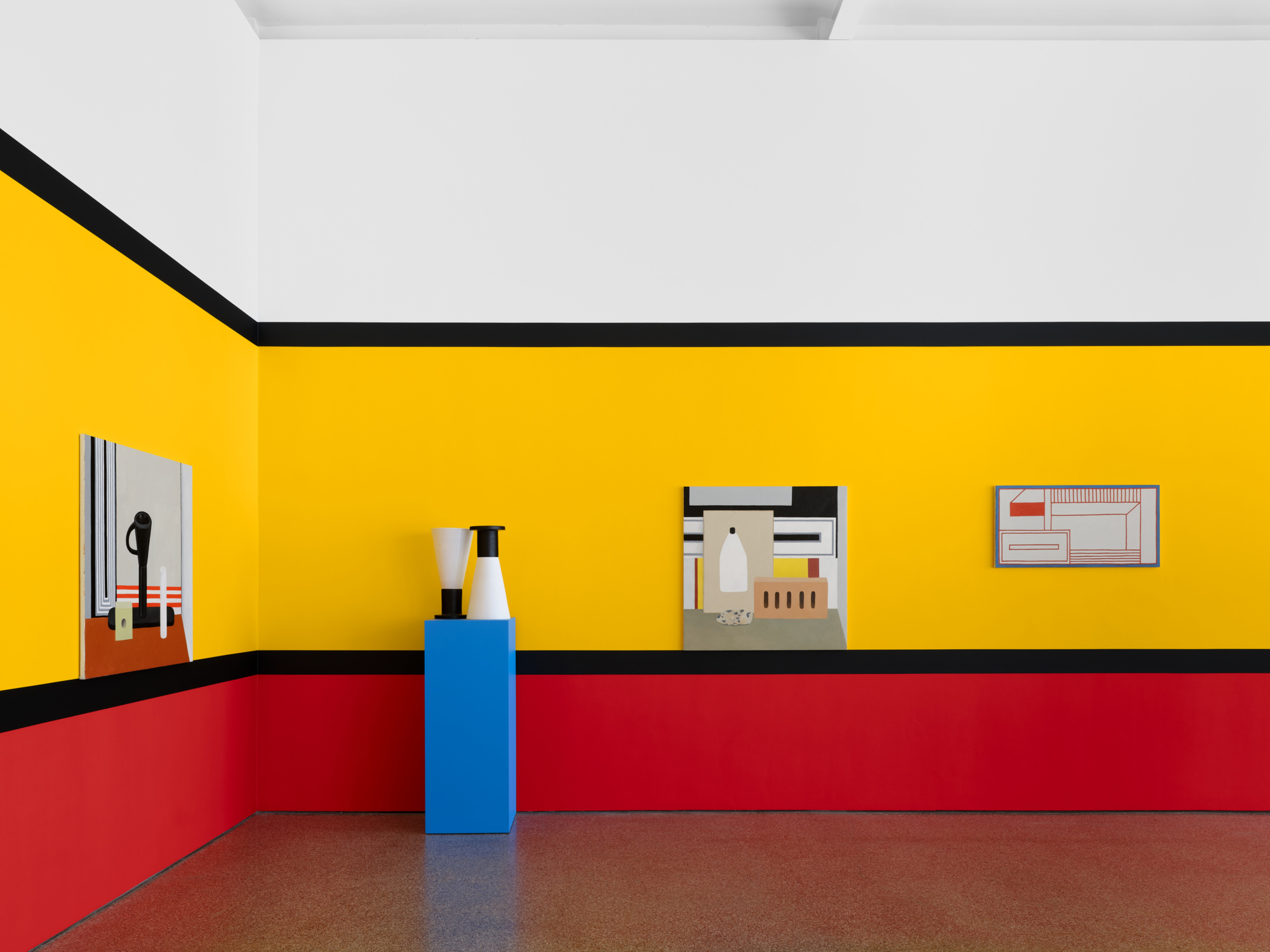
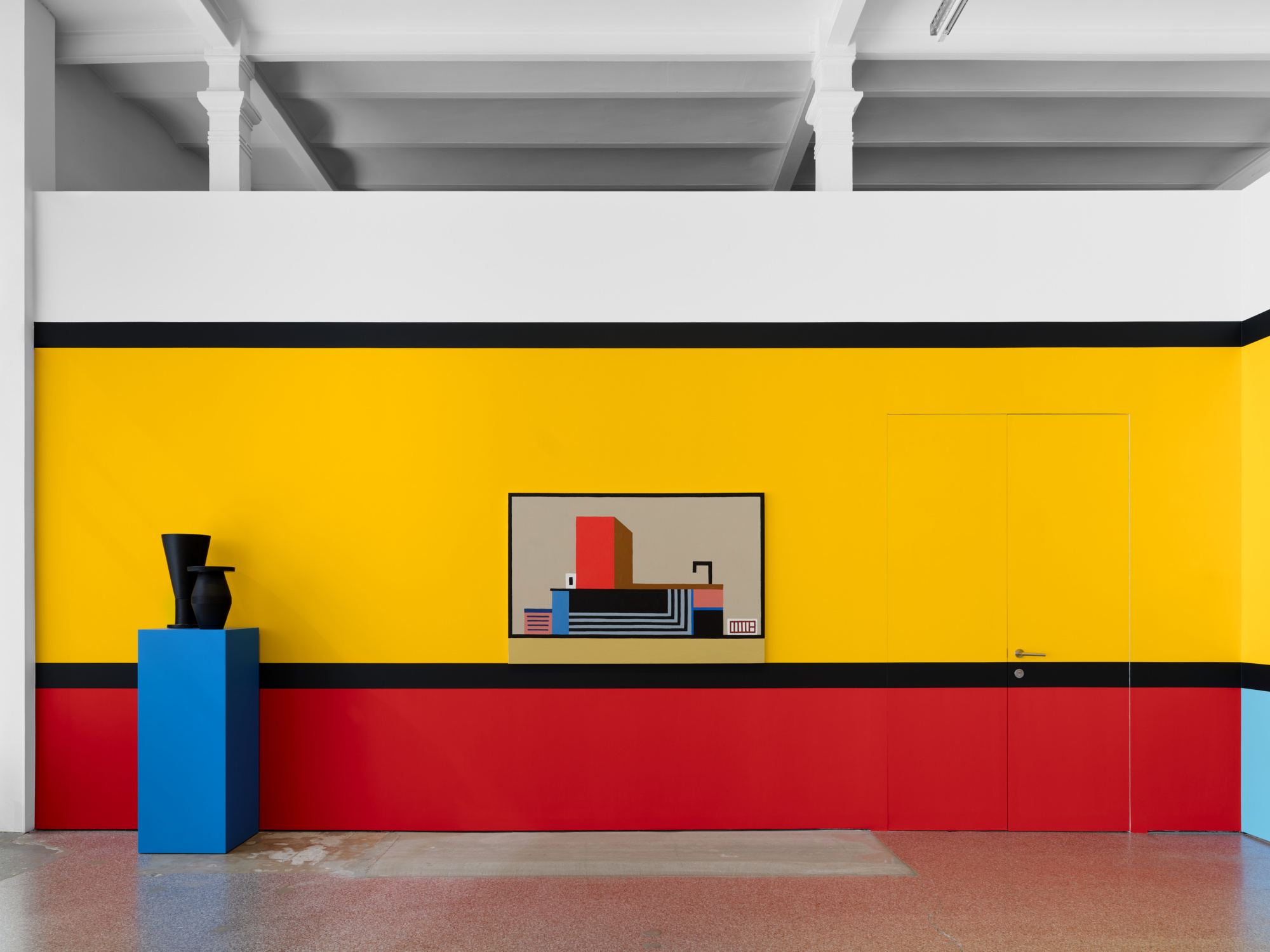
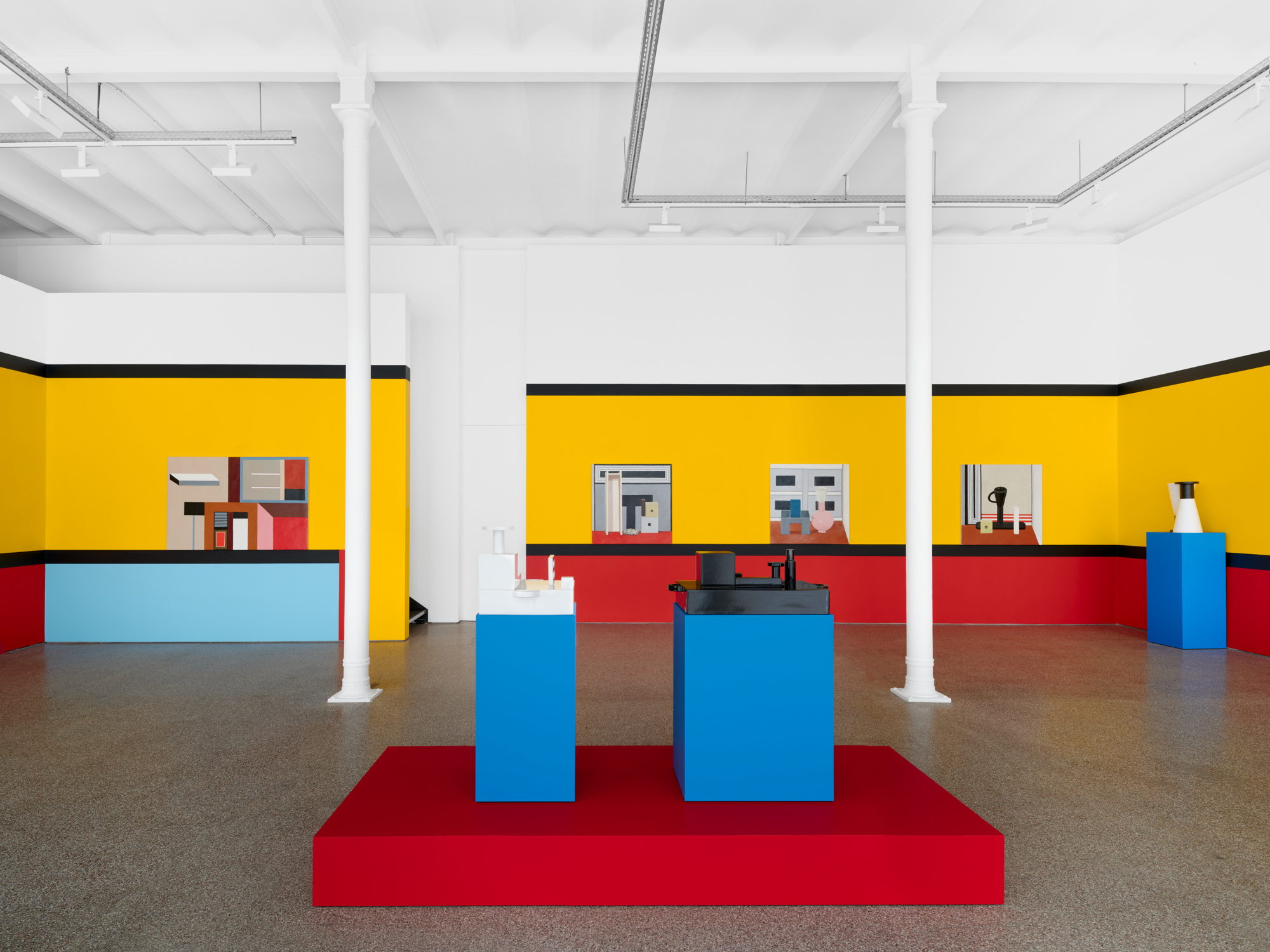
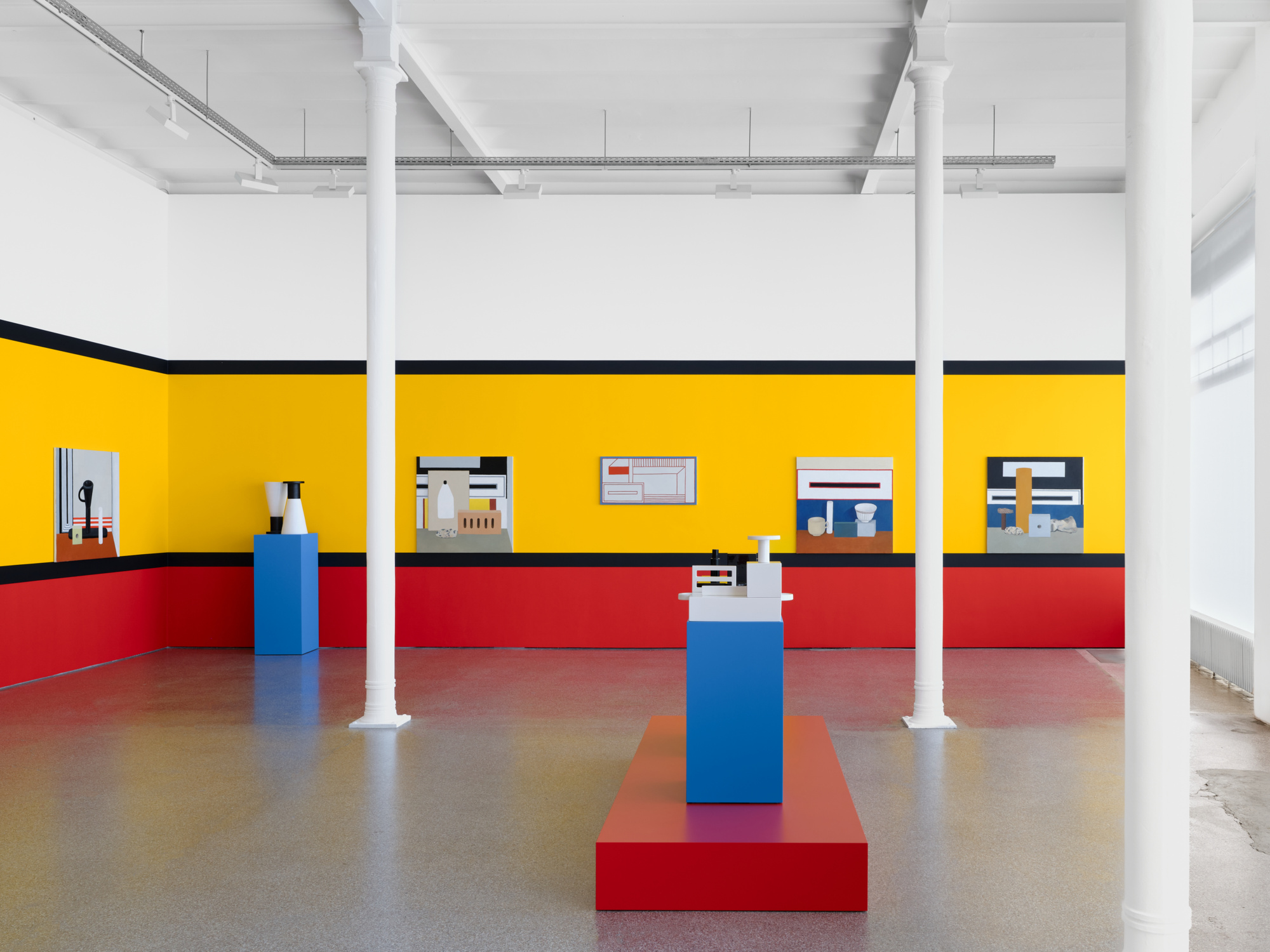
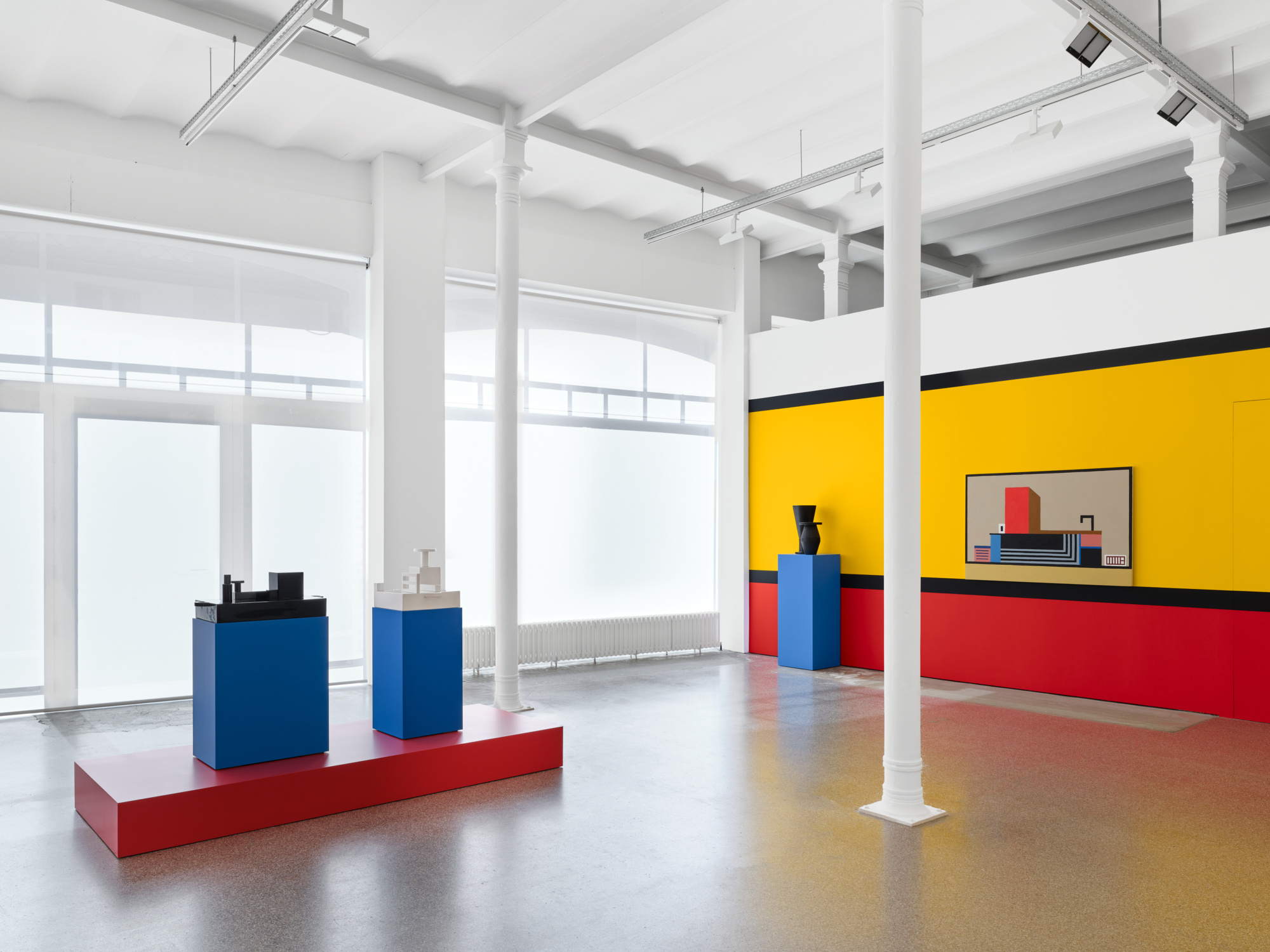
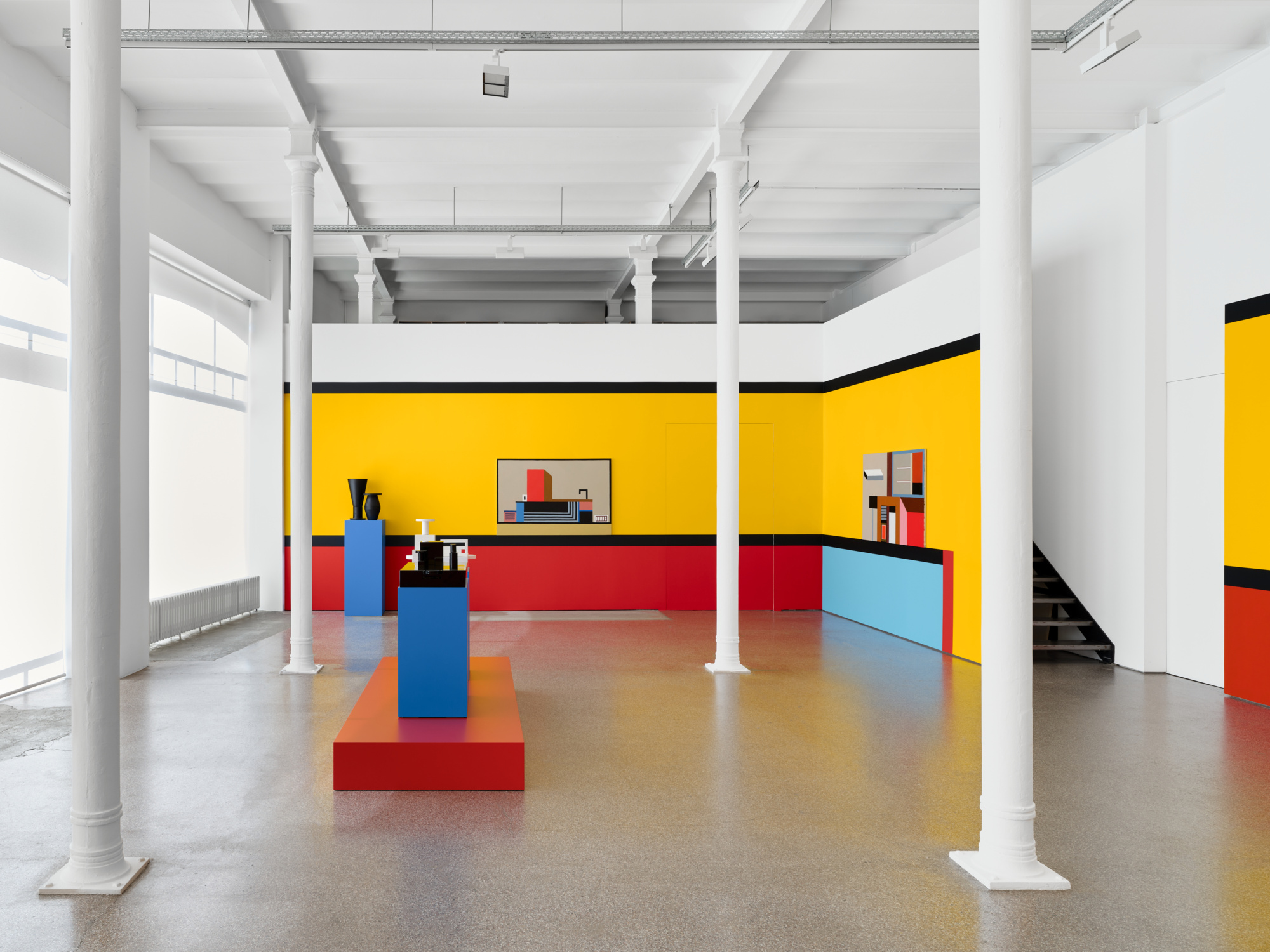
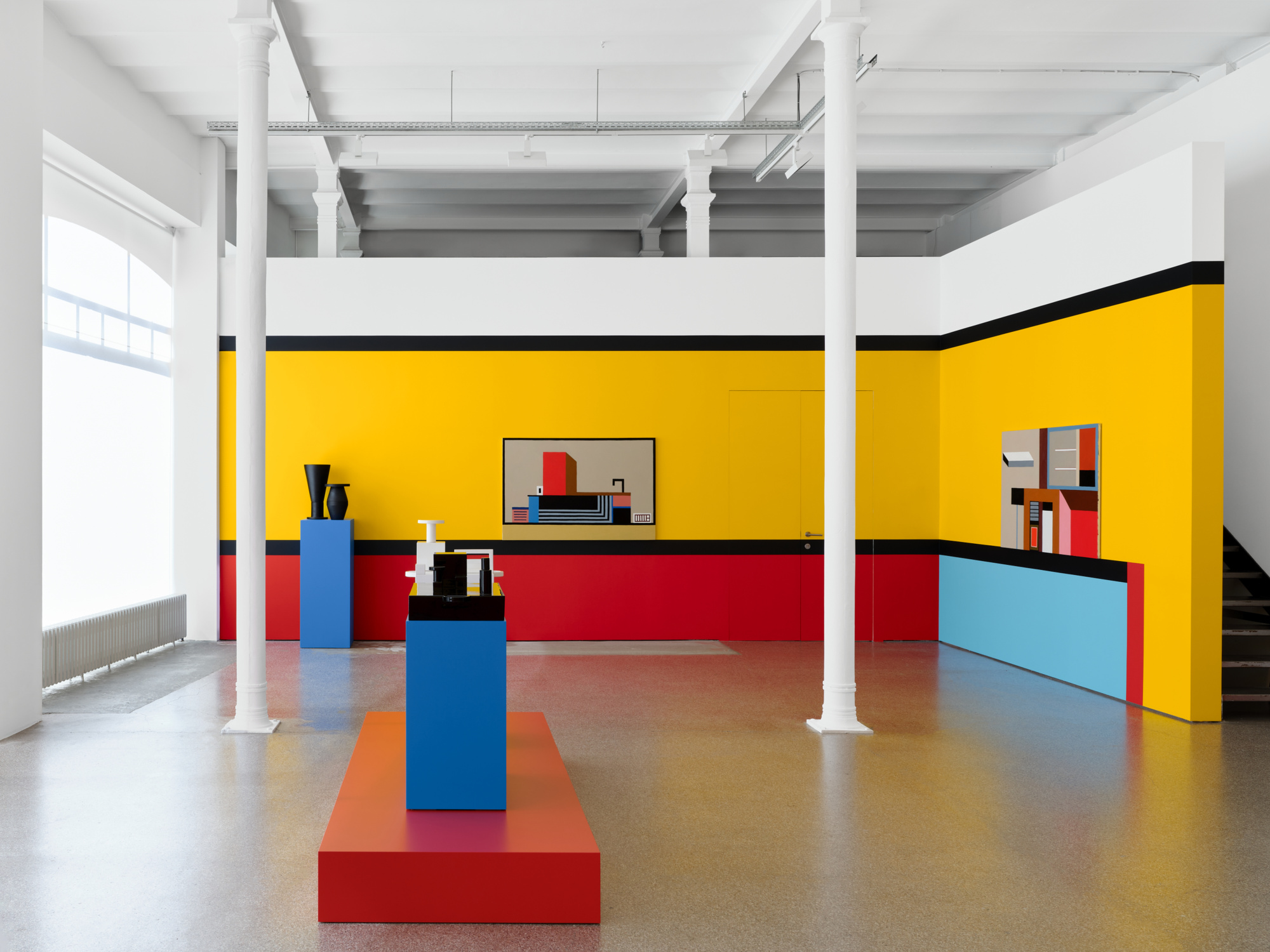
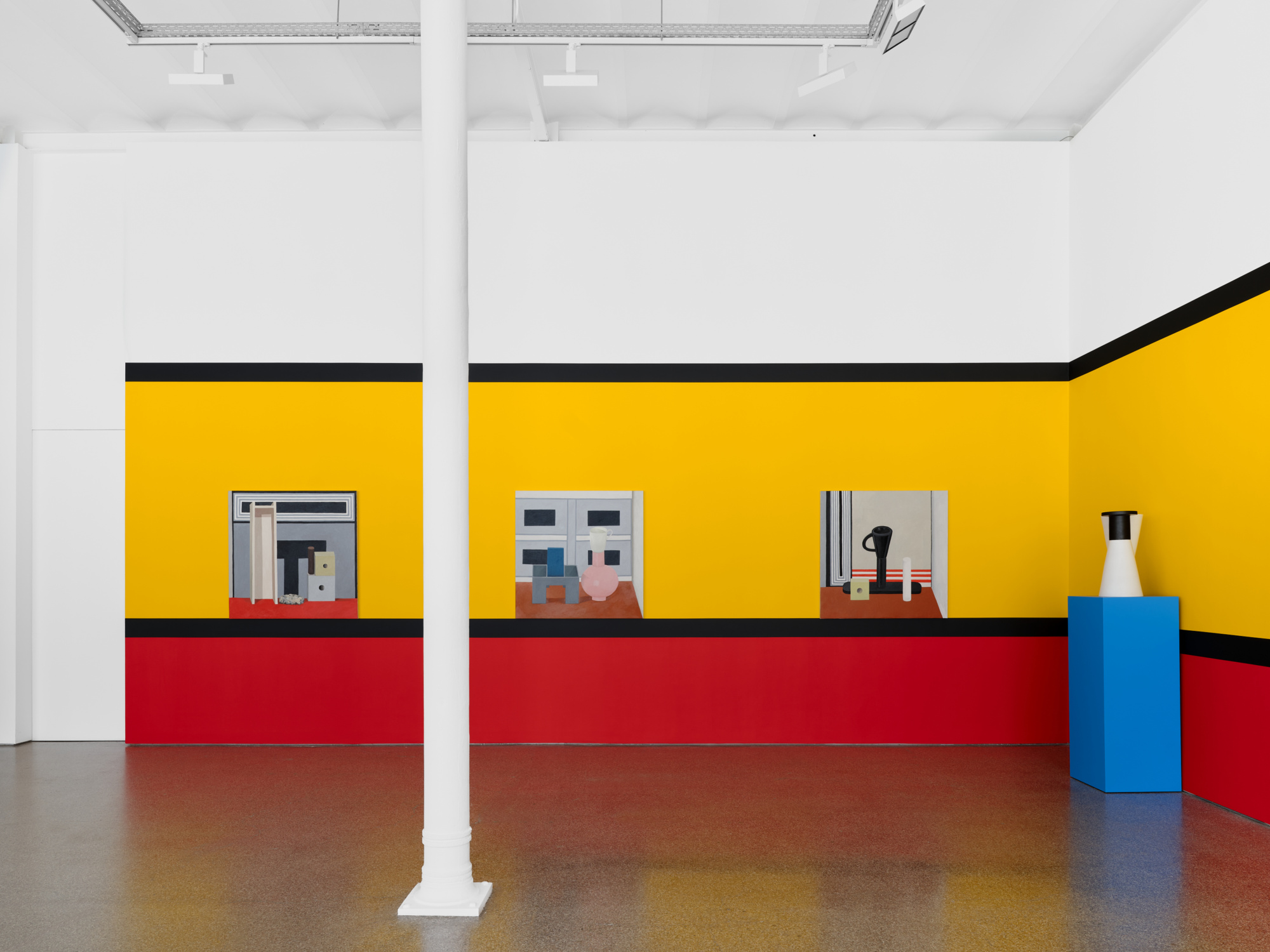
Anyone entering the space registers immediately that no reading direction has been imposed. The mural Du Pasquier designed for this exhibition cannot be avoided: laid across the walls in bright colour, it stops the eye from settling anywhere neutral.
There is no first work, no route, no chronology. The installation operates in two registers at once. It asks first to be taken in as a whole, the ensemble assessed at a single glance, before allowing you to zoom in: on a series, a single canvas, a specific form within that canvas. Switching between the two is left to the visitor, who, even viewed from the threshold, already stands in the middle of the composition.
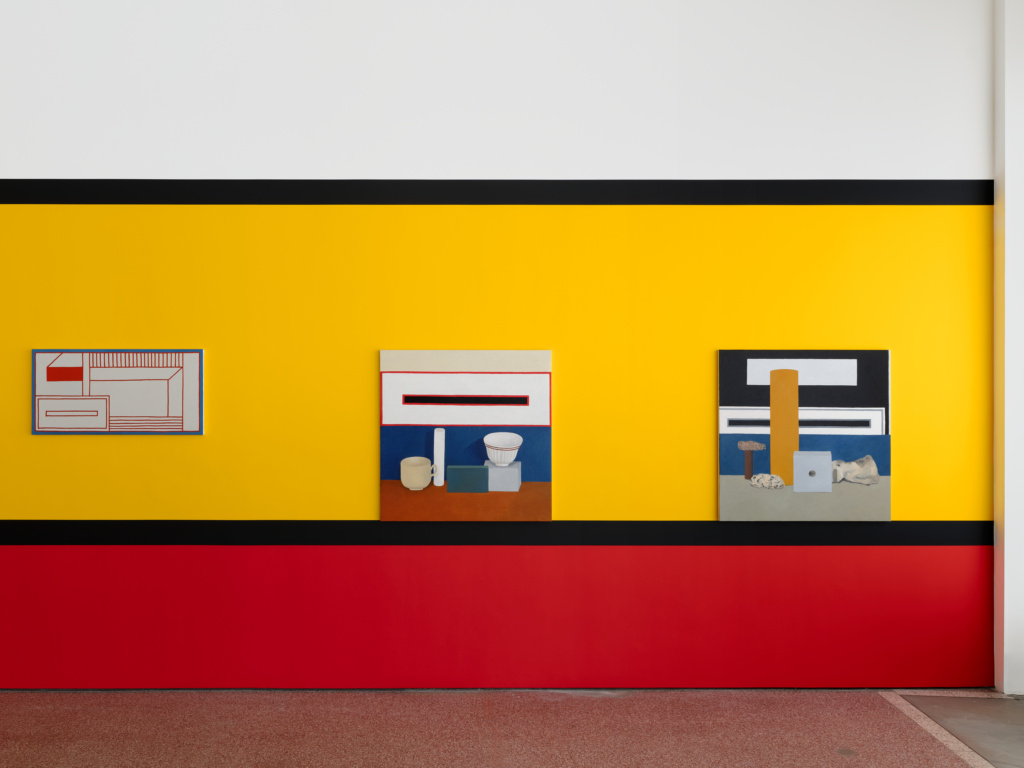
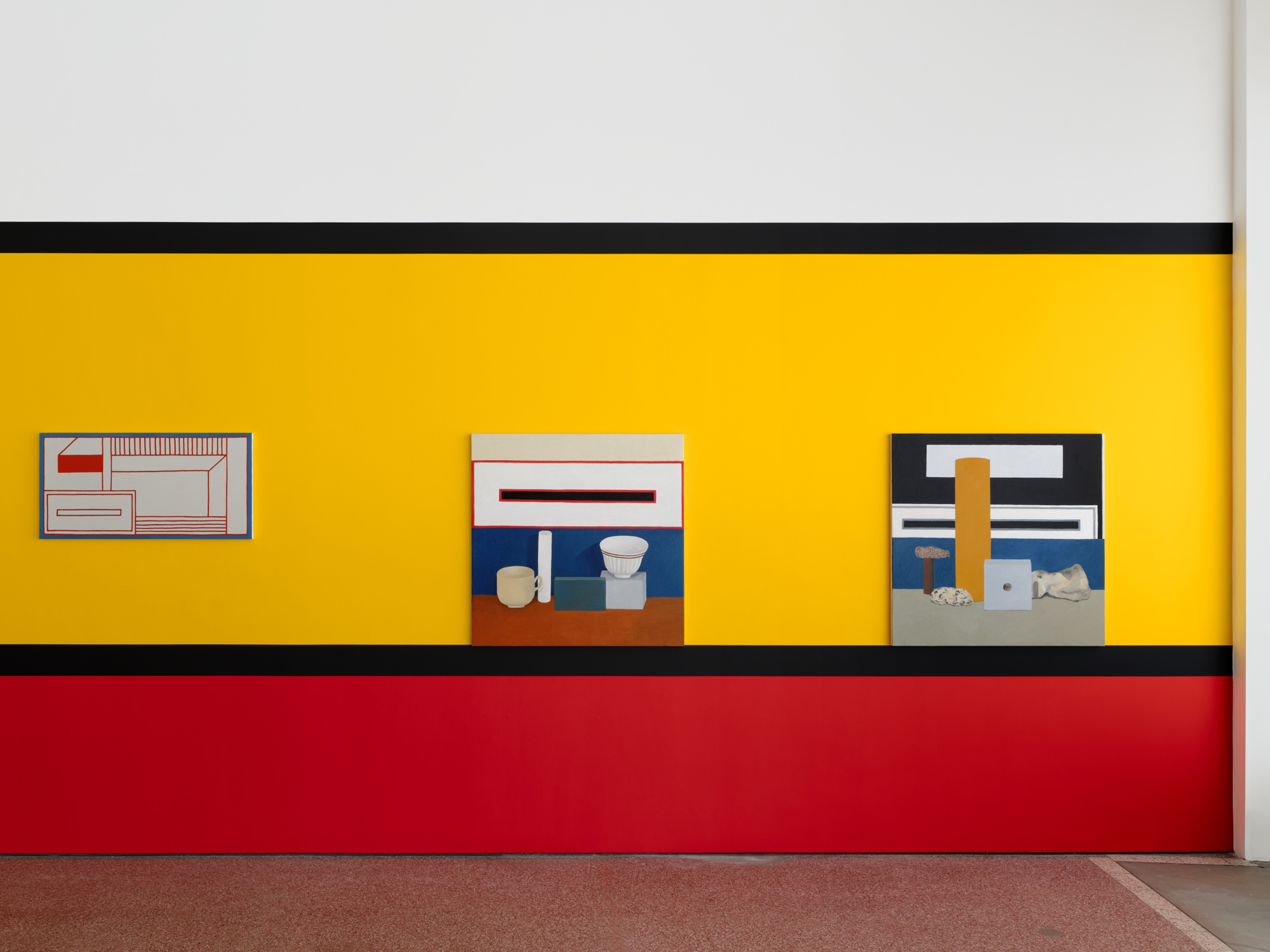
ON A SHELF states exactly what is happening, and implies something impossible. The works stand on a shelf that is not a shelf: a painted streak, two dimensions deep. It carries nothing, and yet everything stands on it. That contradiction is the hinge of the presentation. Canvases arrange themselves around a support that exists only as representation, and move within it like characters: adopting a posture, turning towards one another, keeping their distance. The wall painting is both their stage and their fellow player.
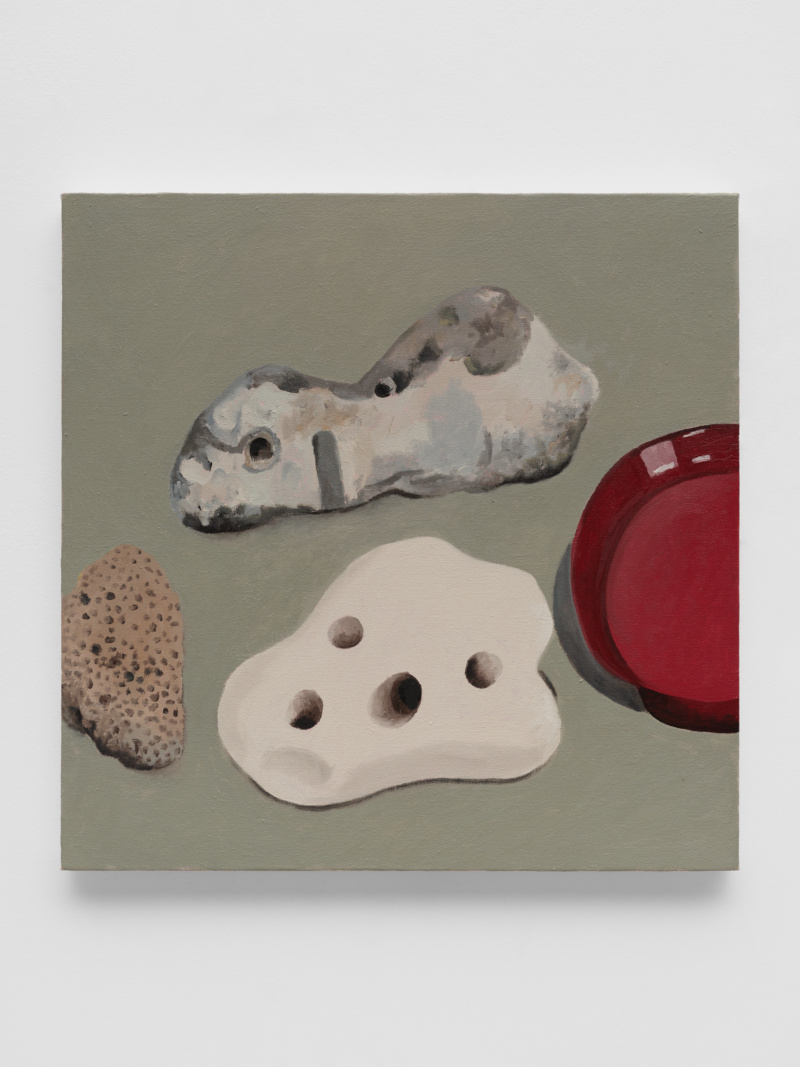
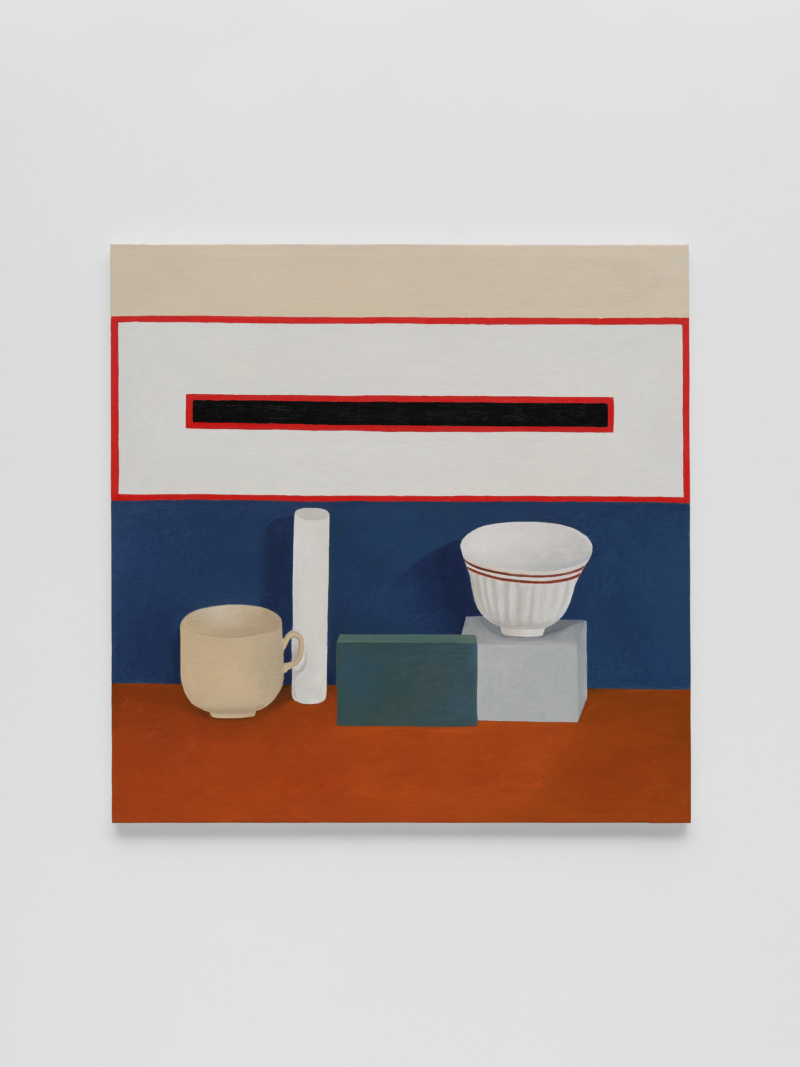
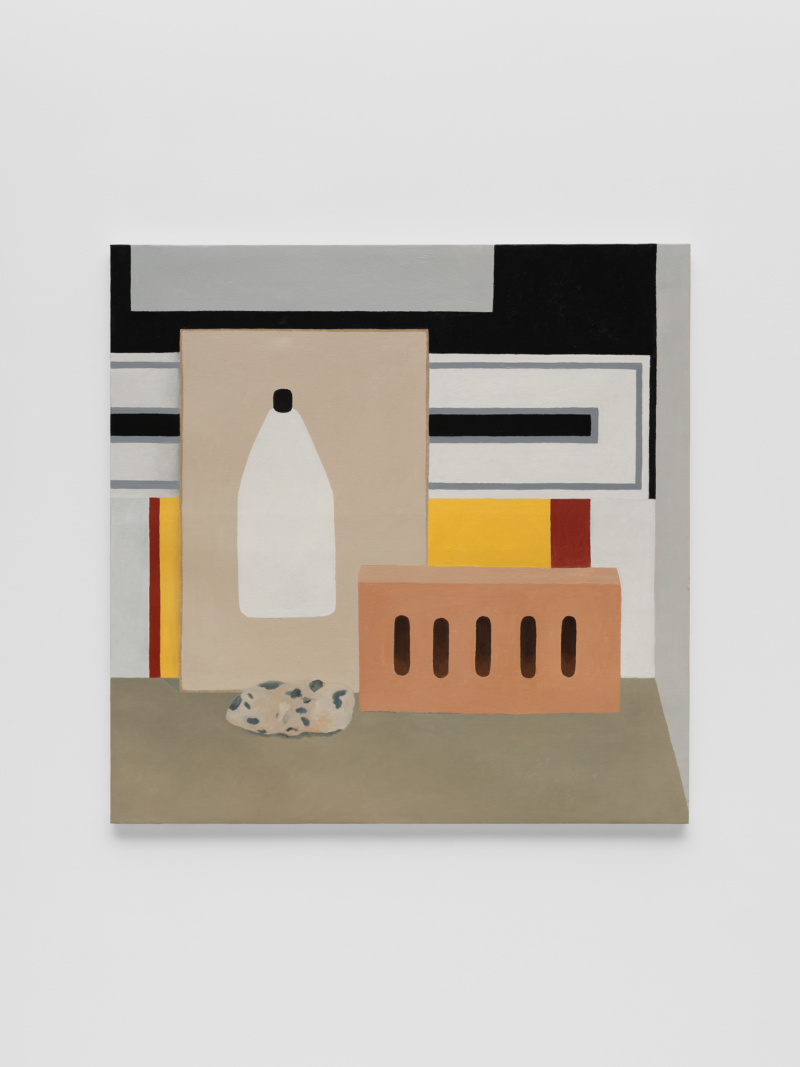
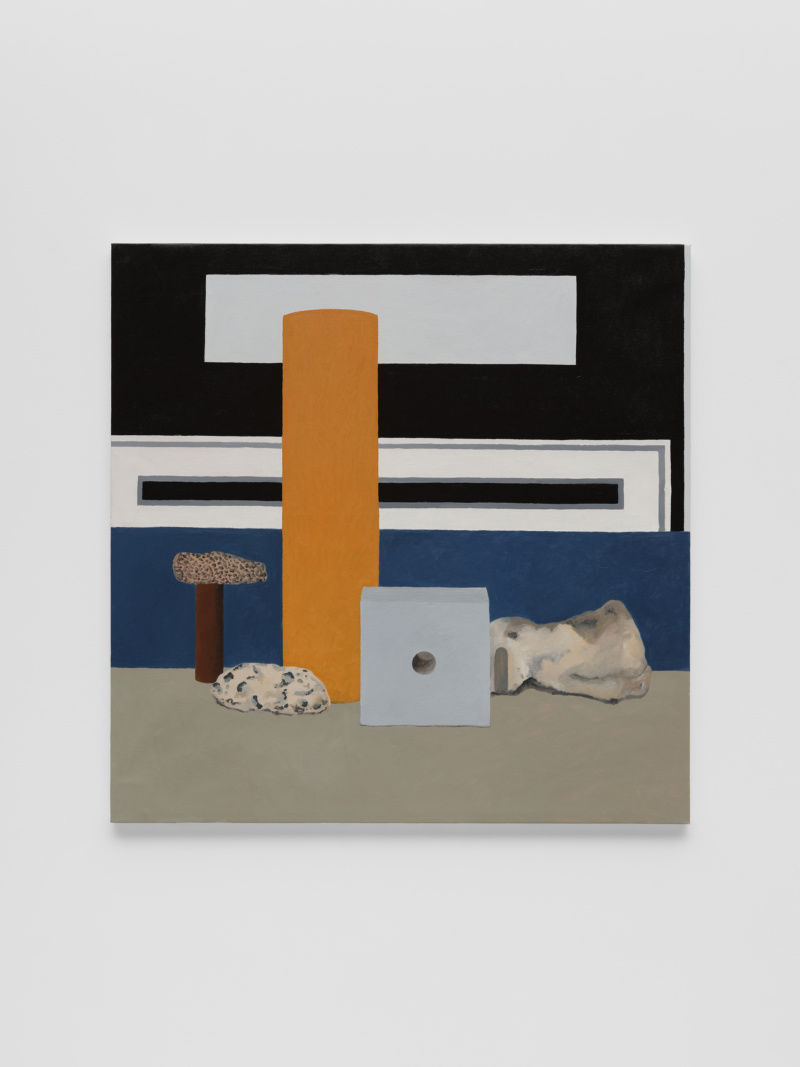
The most recent canvases reach back to an earlier visual language of the artist; the nature morte returns as an explicit subject, recognisable objects taking their place with their particular shadow and position. But the genre has been revised. What we see is not the depiction of a collection of objects, but the tension between forms, a relationship built first in the studio and only then painted.¹
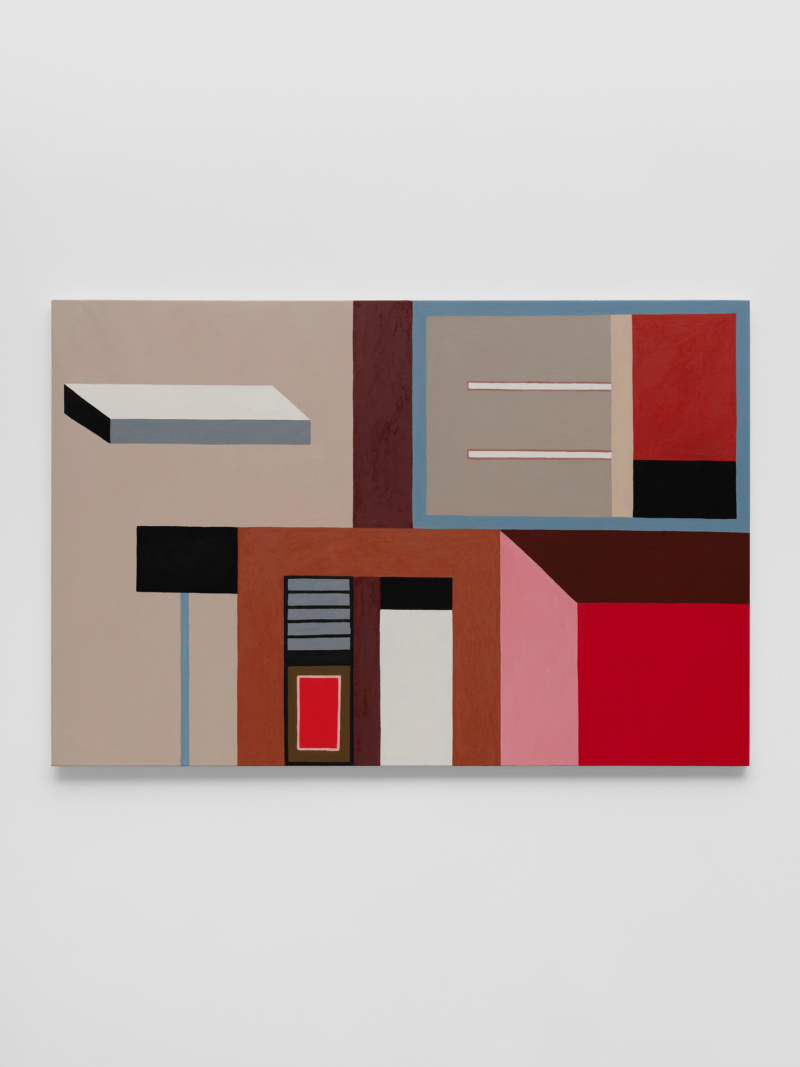
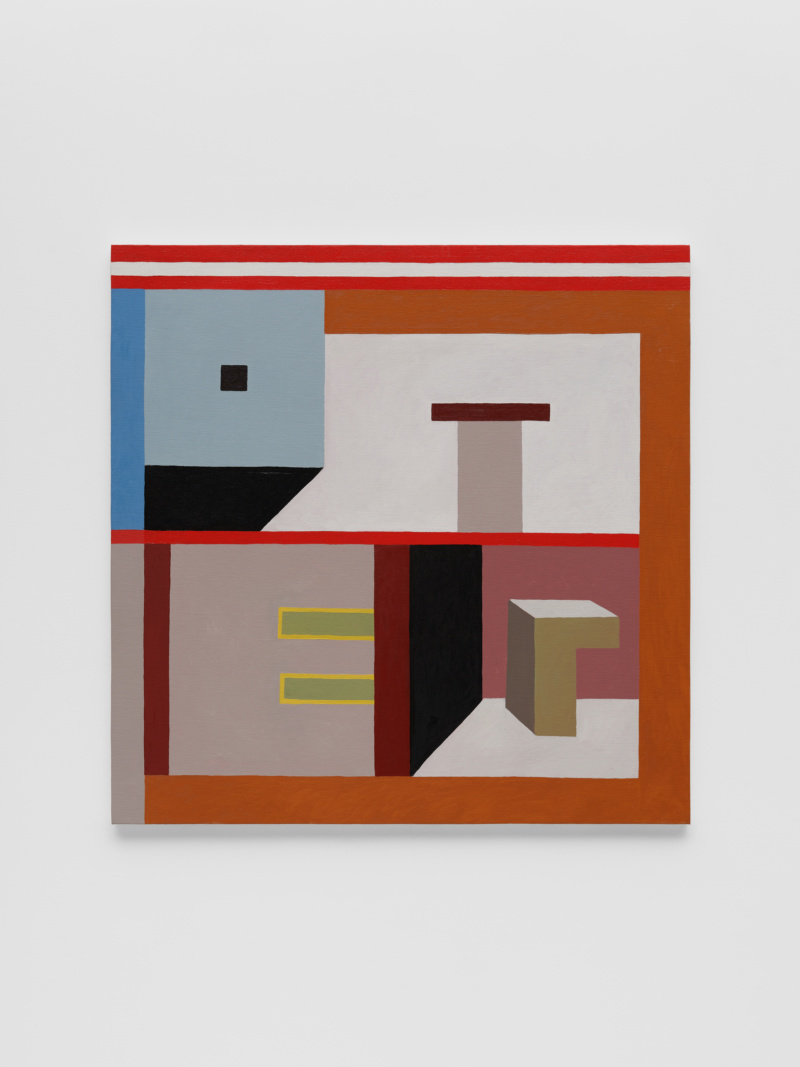
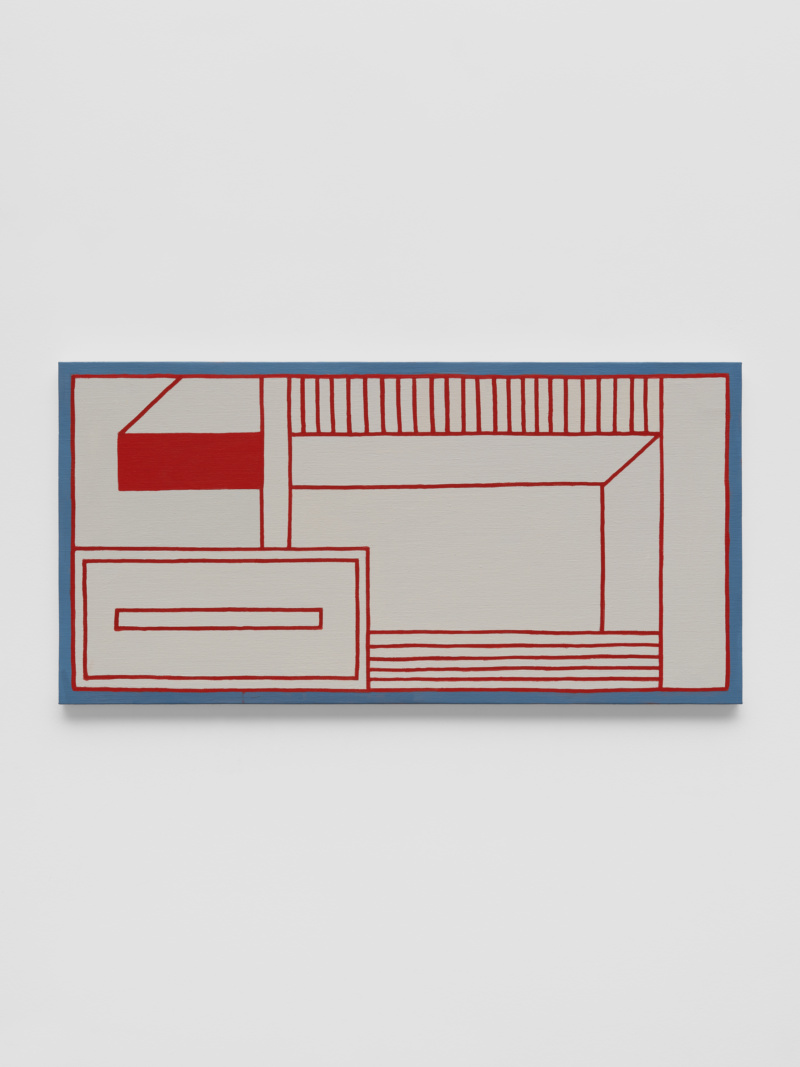
That is why those objects can enter into conversation with Du Pasquier’s apparently abstract work without rupture: that distilled vocabulary of volumes, strips and planes is not an abstraction of nothing, but what remains once the occasion falls away and only the posture of the object is left standing. For Du Pasquier the still life is a genre of construction, not contemplation.
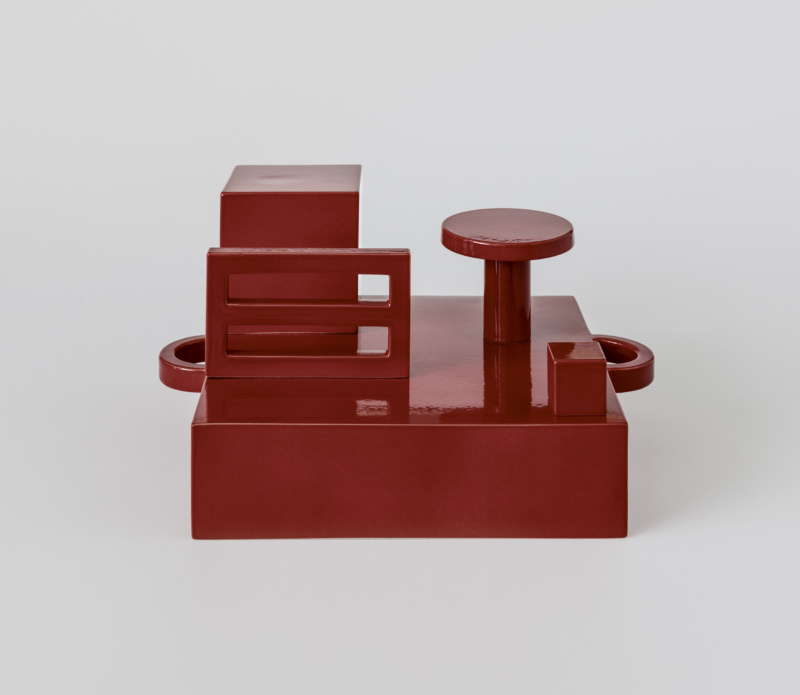
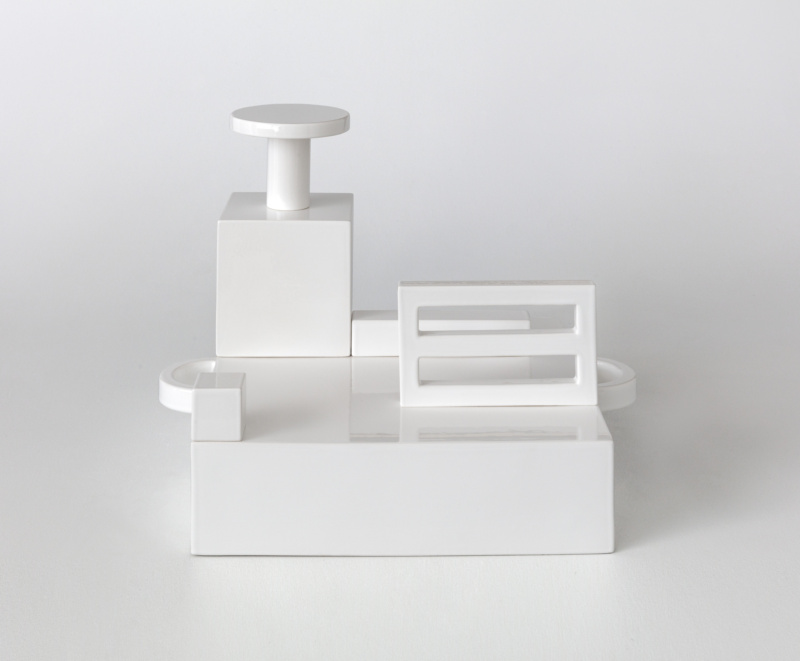
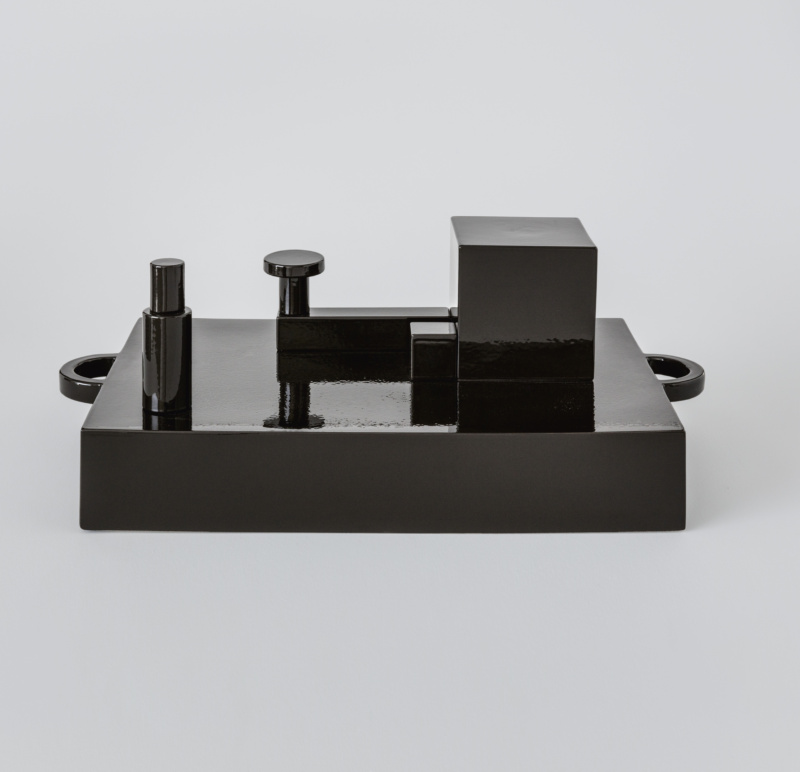
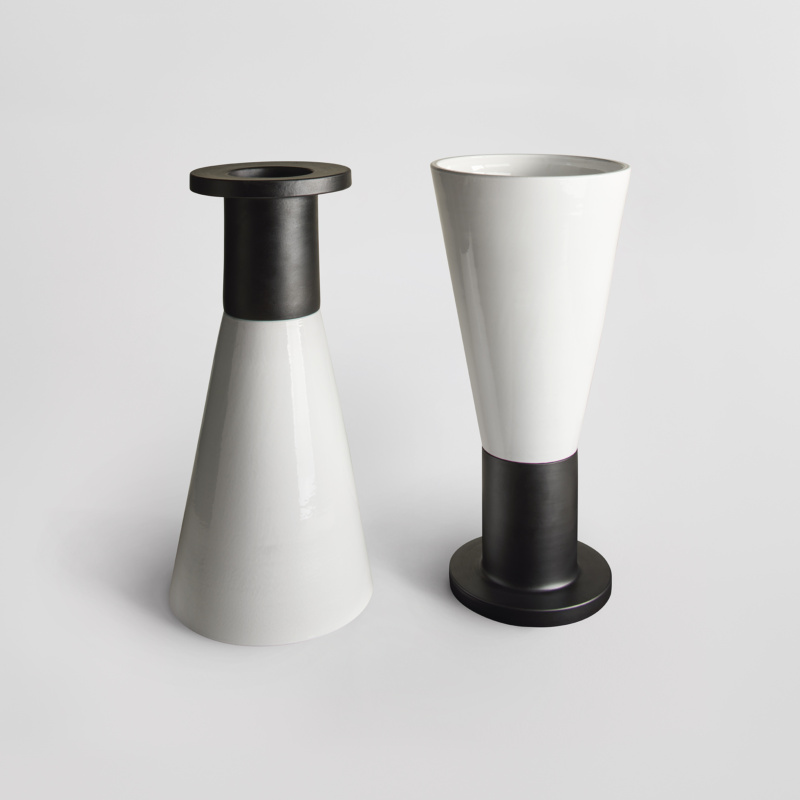
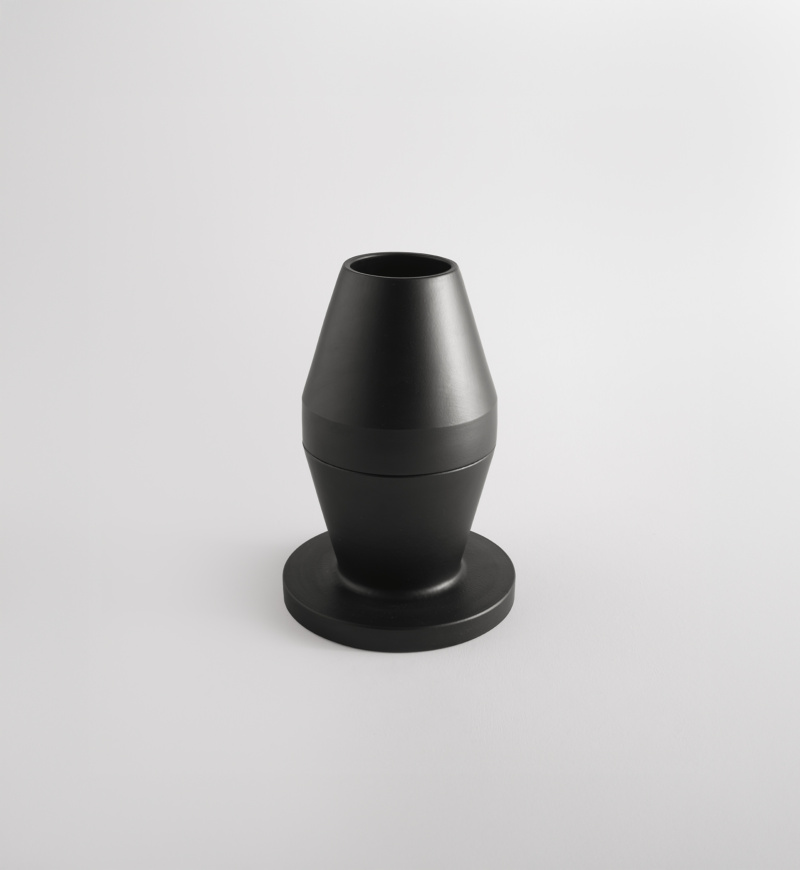
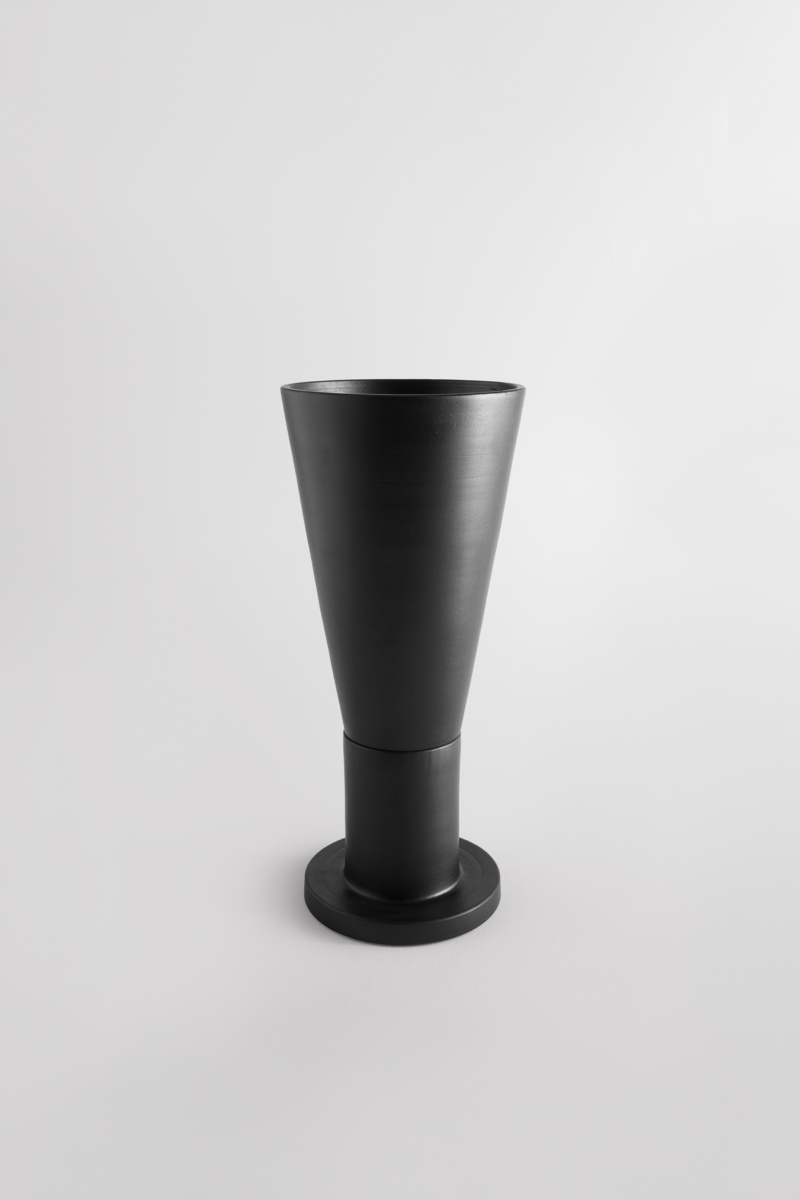
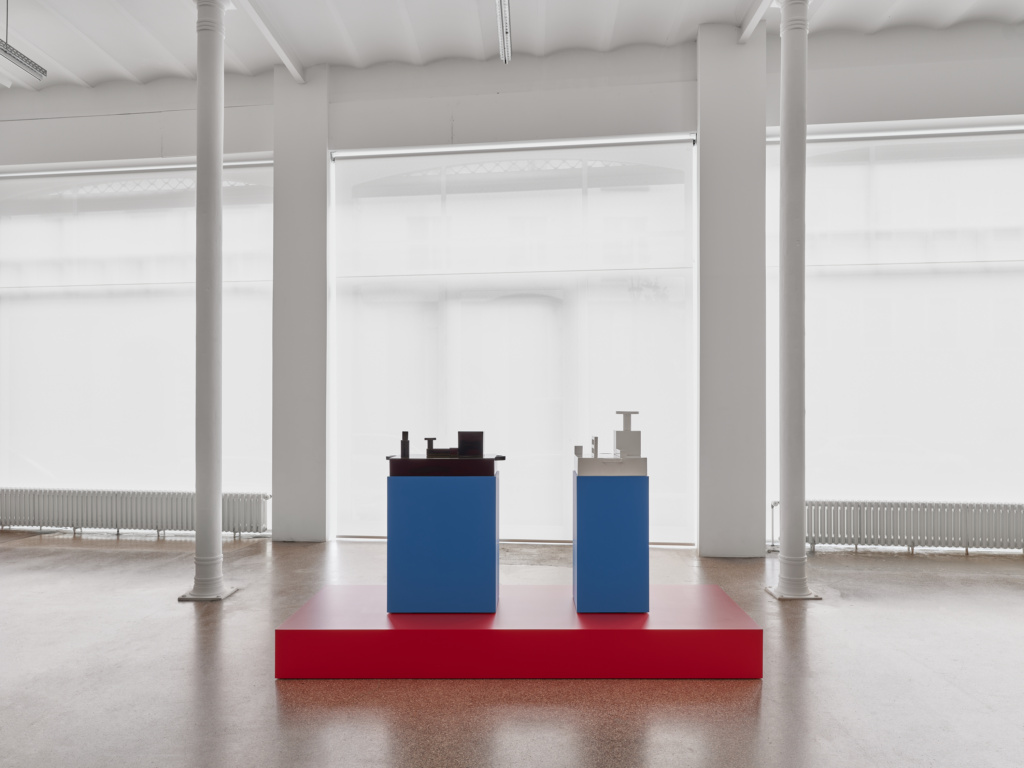
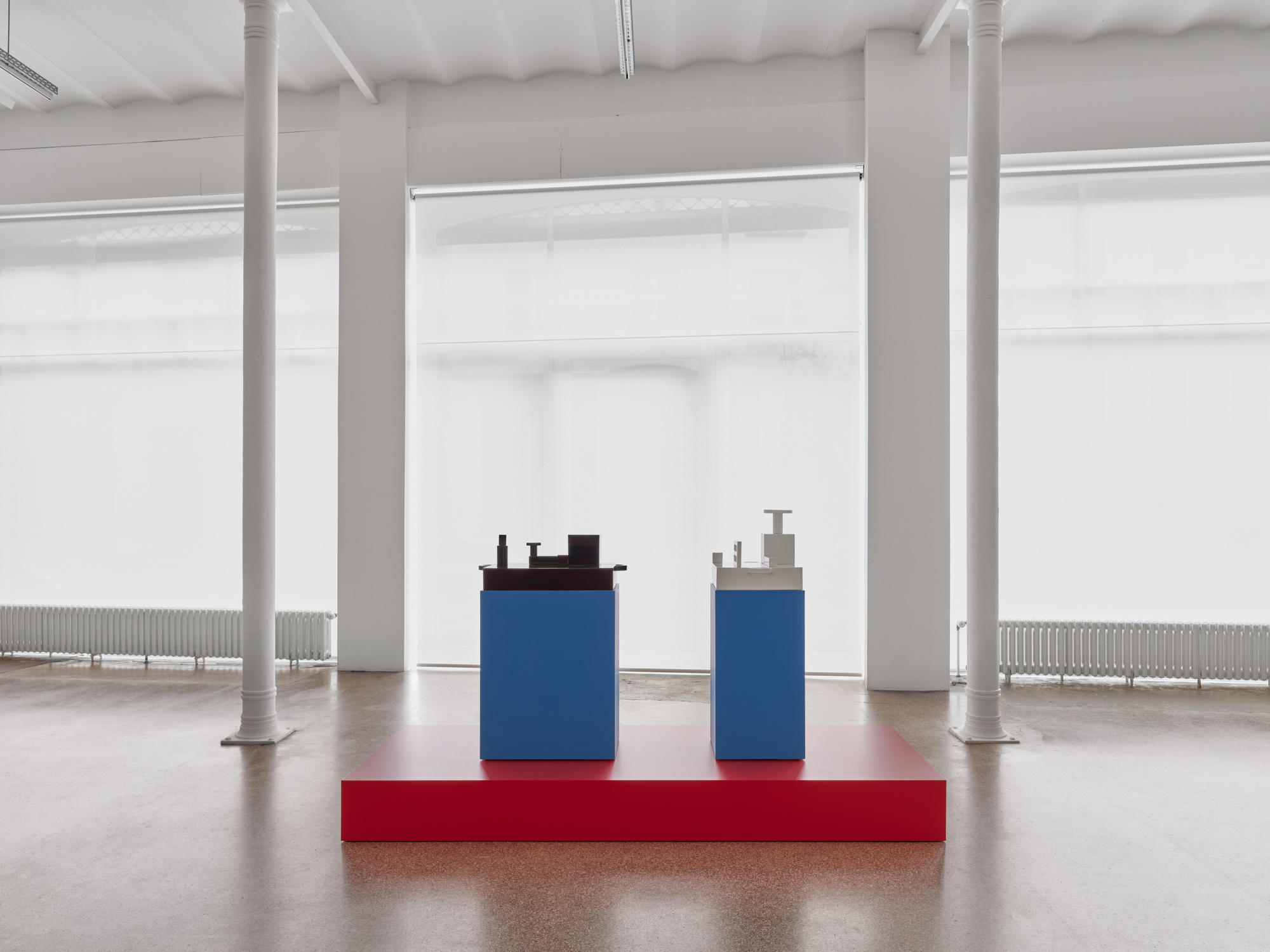
The ceramic works made with Mutina fit into this effortlessly, though they need a real support. The Paesaggi set geometric volumes on a plane to form miniature landscapes, almost metaphysical in their order; the pieces from Coppie di Fatto reveal their double nature only when shown in pairs. Du Pasquier has never recognised a hierarchy between art and pure form. Interwoven with the canvases, the ceramics underline the architectural character of the exhibition: volume, surface, proportion, and what something rests on.
The whole looks playful, and that is a choice, not a misunderstanding. Beneath the vivid colours lies a precise enquiry into what a space dictates and how it enters into conversation with its viewer. That knowledge stays deliberately out of the foreground: whoever displays their erudition dictates the reading, and Du Pasquier prefers to let the viewer find their own way.
The exhibition works as a form of Gesamtkunstwerk: paintings, ceramics and a mural developing together into an experience none of the parts could produce alone. Yet no element loses its autonomy. Each protagonist holds its own outside this space too, once the shelf disappears and the scene changes.
¹ Luca Lo Pinto, the first to place her work in a major institutional context, put it this way in the curatorial text for BIG OBJECTS NOT ALWAYS SILENT (Kunsthalle Wien, 2016): Her still lifes show not a “group of things” but “a relationship between forms”.