
To show that nothing has changed, proposal for a critical method.
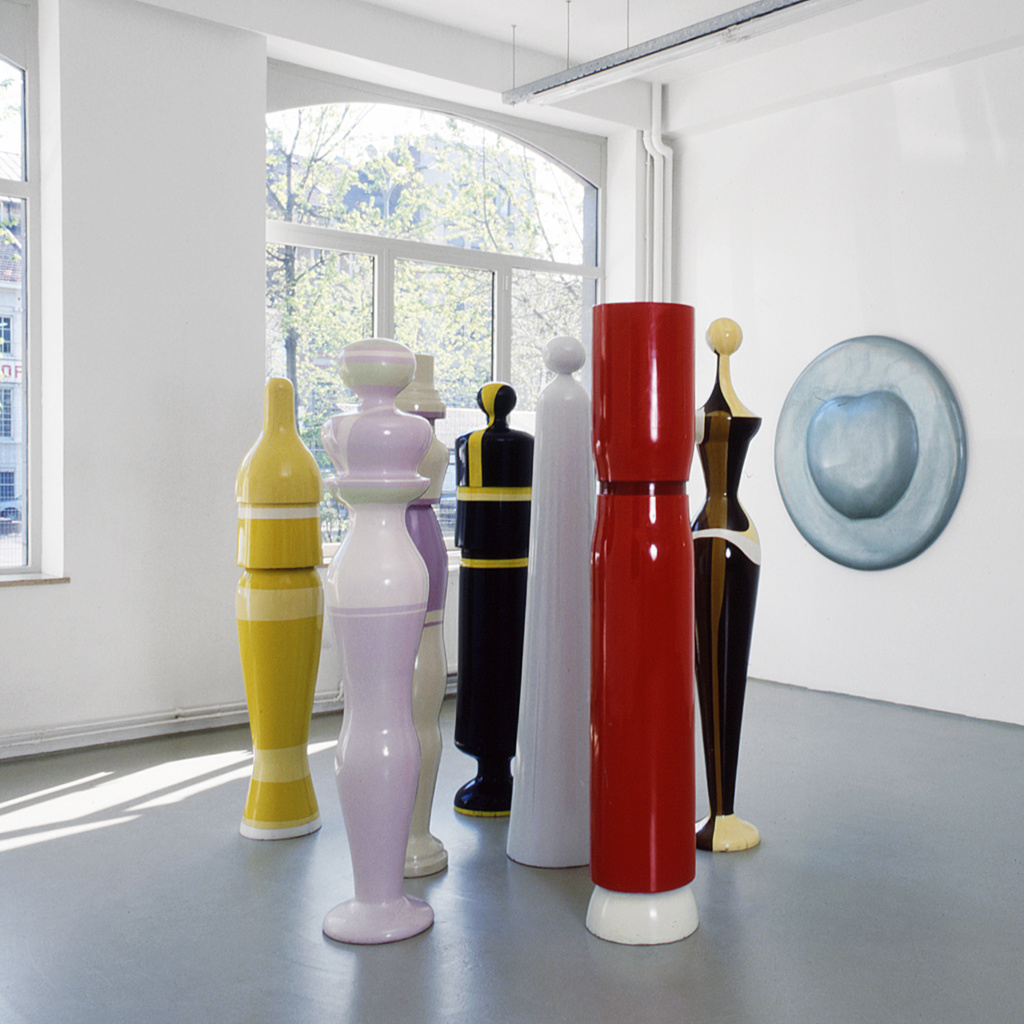
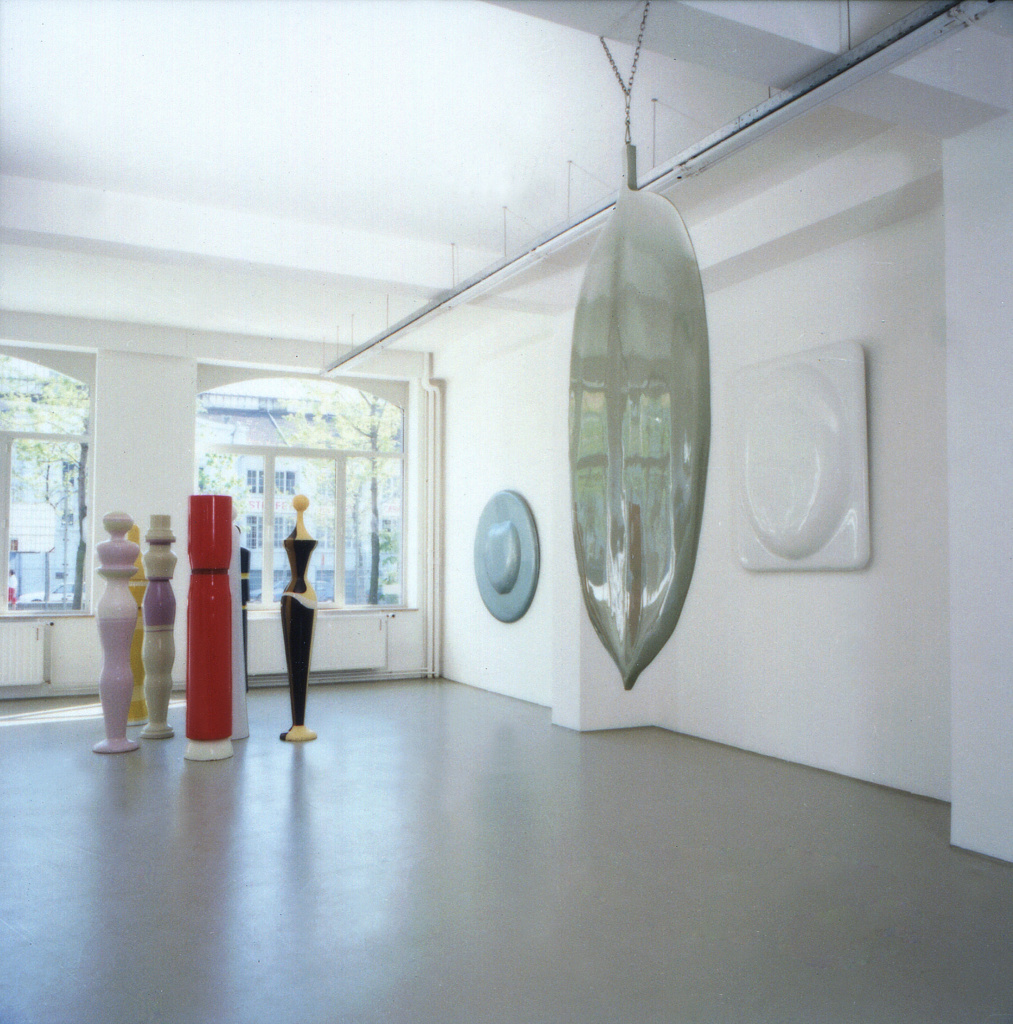
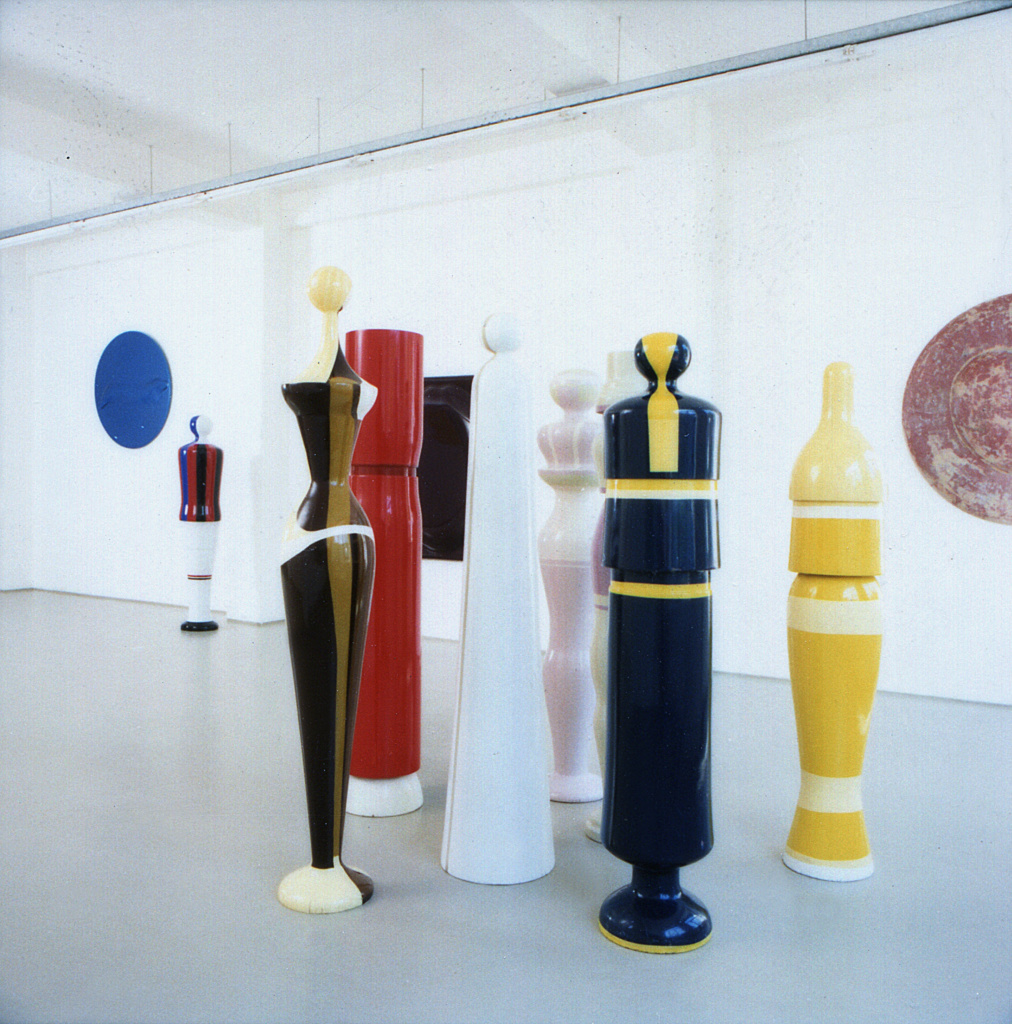
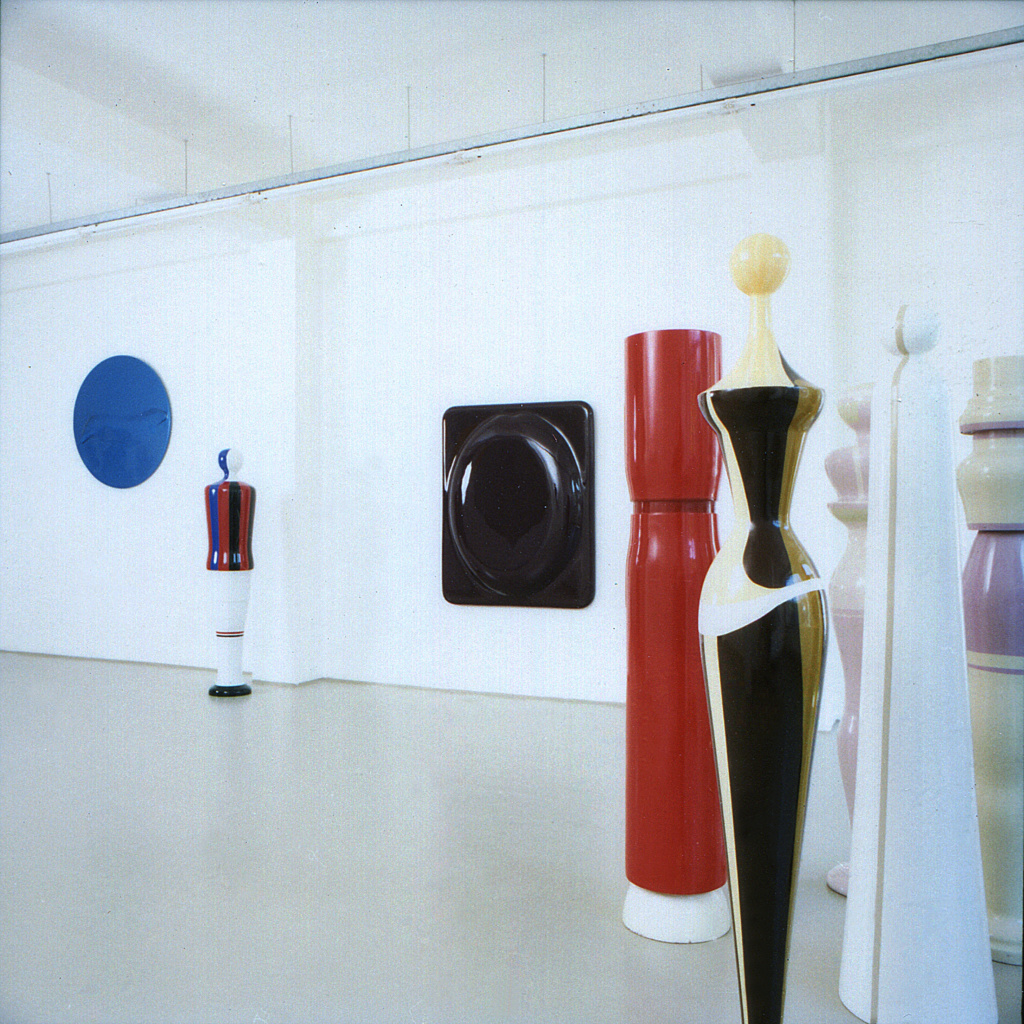
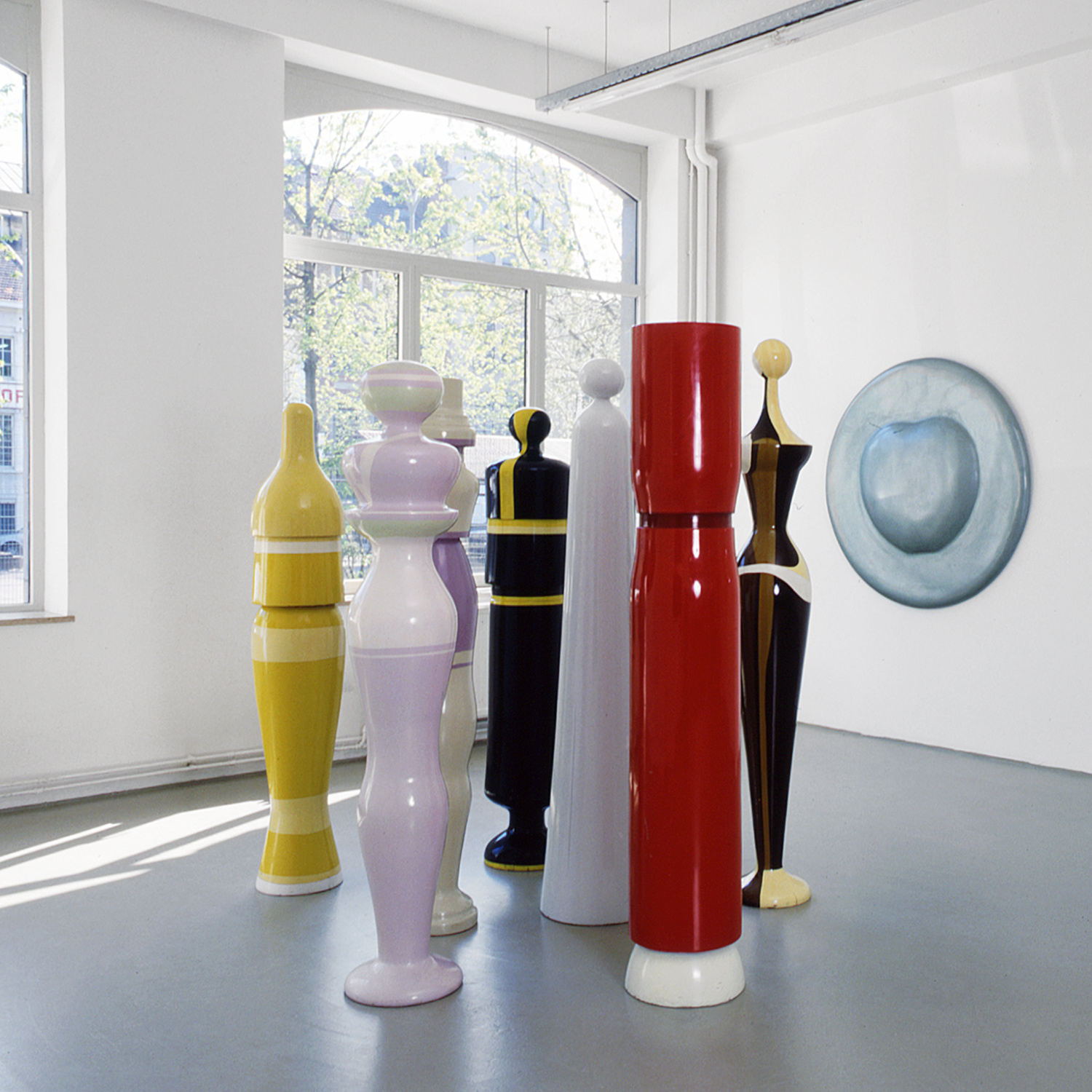
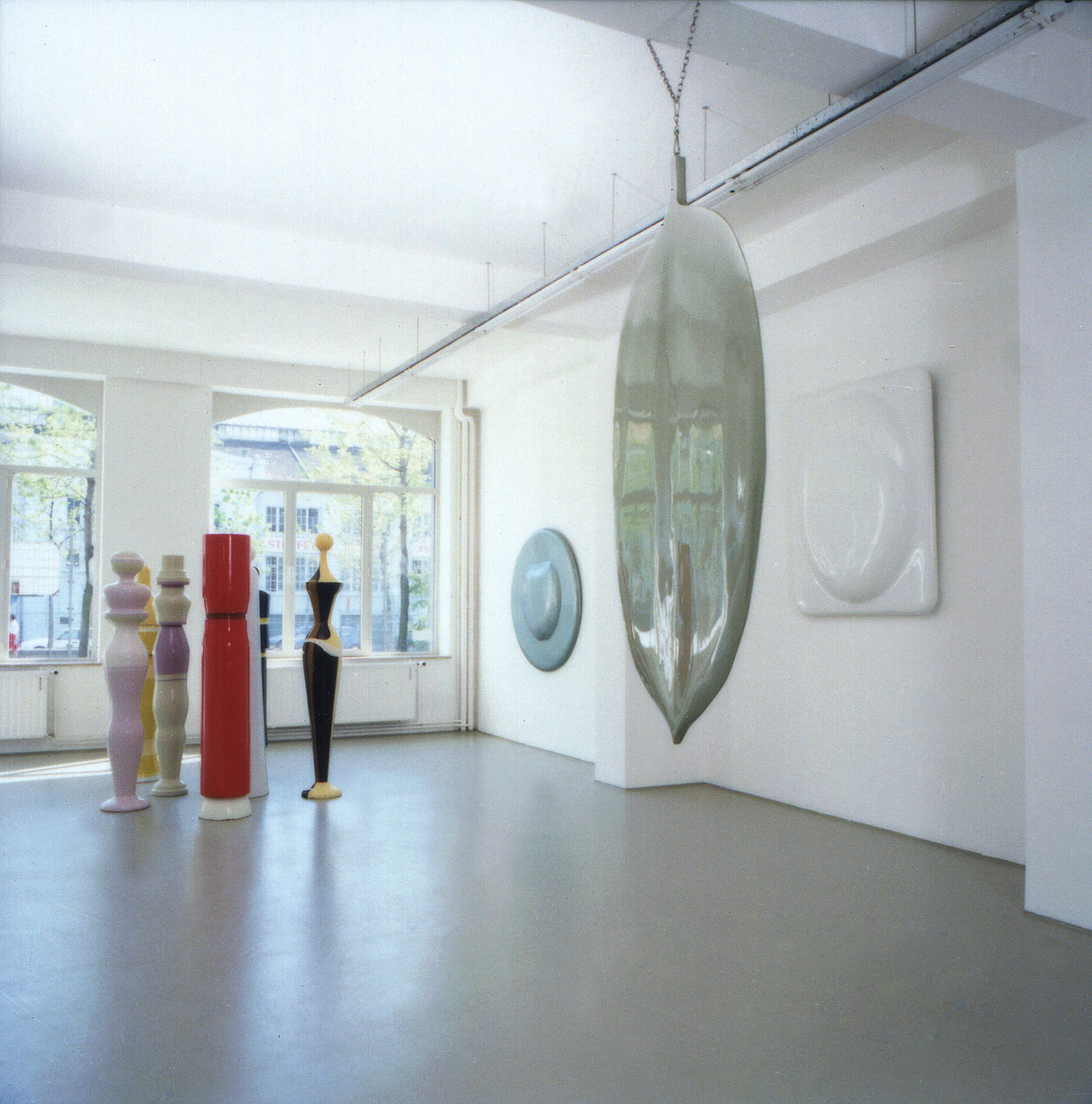
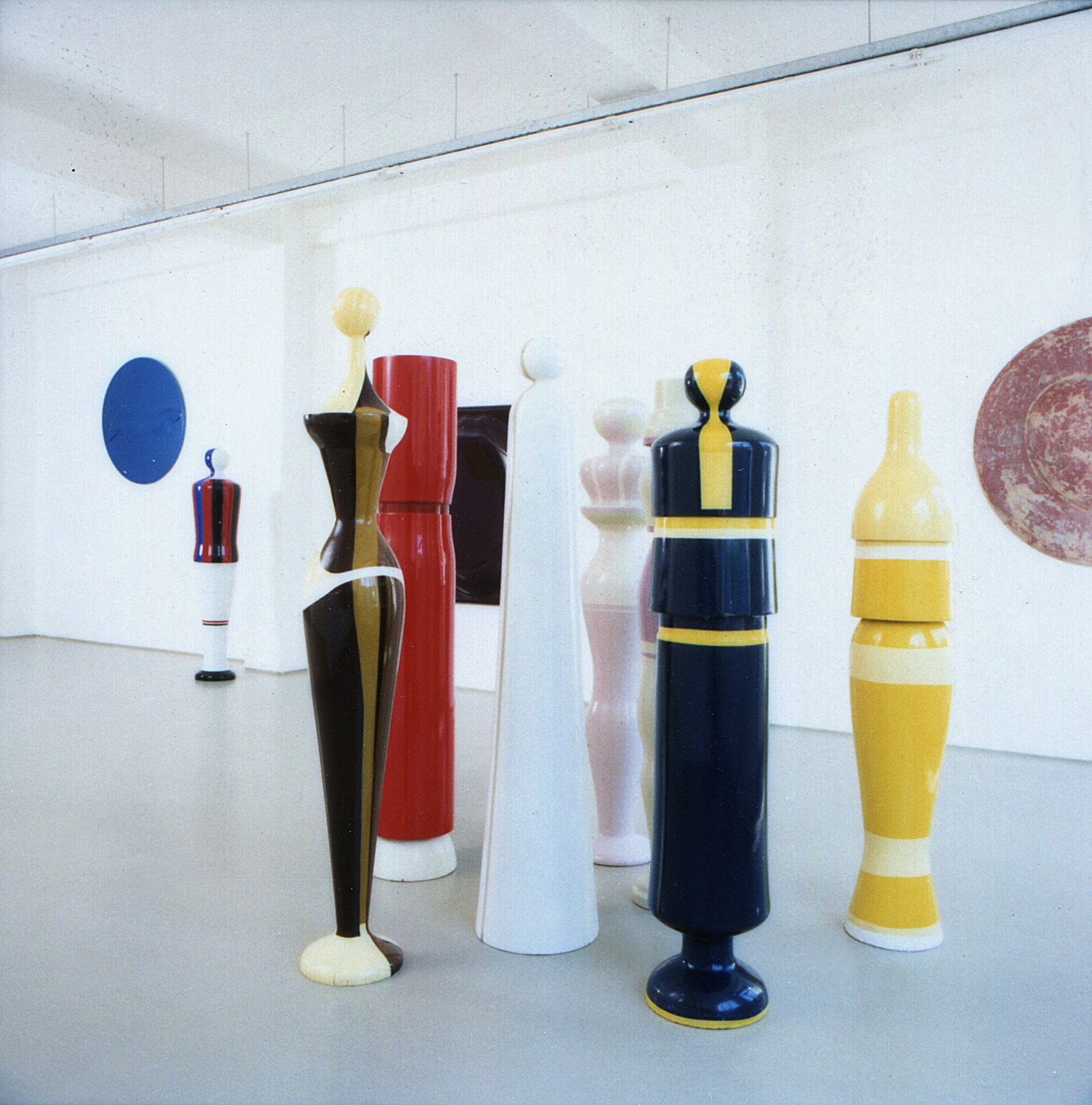
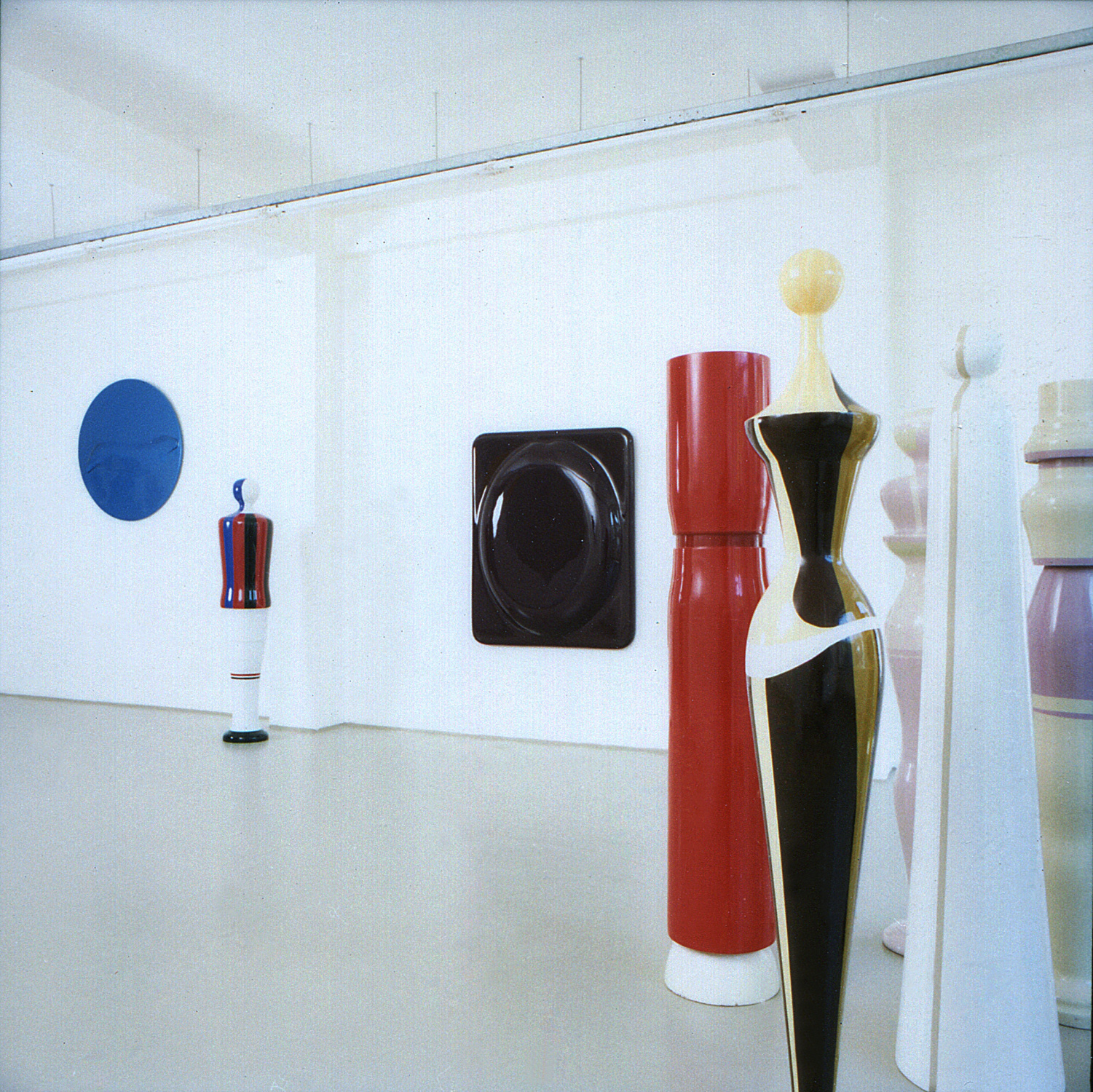
Jef Geys’s decision to reinscribe his artistic practice within a Brussels gallery, after more than twenty years of voluntary withdrawal, appears at once significant and perhaps insignificant. Why this degeneration? Insignificant in that it bypasses the conventional conflict between the artist and the gallery public, and significant in the analytical proposition of the exhibition concept itself. “Cupboards, Dolls, Fruits etc.” was the title of the invitation to the opening of 24 April 1968 at the New Smith Gallery in Brussels. Dolls and fruits punctuated the space in vivid colours. Skittle dolls, fruits, car bodies and bonnets, sculptures in fibreglass, gleaming composite fibres formed a kind of alphabet on the border of the artistic statement: object design, functional or sculptural? The articulation of the forms arose from a transformation of various reflections that had preoccupied Jef Geys since the early sixties:
“At a certain point I began to study all sorts of situations according to their outward appearance, for example that chalk drawing on the street which remains the only witness to an accident once the police have made their report. I had made a negative of my own body, from which one could then make an outline anywhere: in the street, at home, on a wall, in the sand… It was a matter of accentuating everything that had previously taken place, and of which nothing remains but an outline on the ground. Following this, I began to make outlines, to visually fix the pattern of people acting in a group. The question was this: what unites these people?”
The works on show oscillated between two more or less defined categories:
— floor sculptures referring to the standing human figure: skittle, tumbler doll, doll…
— relief sculptures hung on the wall: fruit bonnets of cars… This latter reference was made explicit through evocative titles: Plum, Damson, Panhard, Cherry Red Triumph, Rolls… banana yellow… The work carried out a sociological deconstruction of the fascination exerted by the motor car, which presented itself as an object of symbiosis with organic and vegetal connotations. The fetish of consumer goods (car or artwork) undid the triumphalism of the object, doubled by an ironic recall of colour.
If we reread Jef Geys’s citation above, a leitmotif runs through all his propositions and installations: to address the external, superficial aspect, or, to use his own terminology, “social fraud”. What could be more external than the car, which shows itself everywhere? What does Jef Geys exhibit today for his new Brussels presentation? We are confronted, in part, with the same sculptures, collected for a month-long exhibition opened on the very same day, 24 April, but twenty-two years later. This will to make or remake an installation situates his artistic activity within the circularity of time, in its repetition. Does the sense of duration not act upon the experience of the dialectic of change and of continuity? Jef Geys questions here the notion of evolution, of originality at any cost, the well-known preference of collectors for the artist’s early works as opposed to current production… circularity of time, circulation of money, of the market. The titles of the sculptures speak of colour, and this notion is here revisited through the visible display of colour sample cards from various car manufacturers currently on the market. Colour as use value, as knowledge, colour has no “free” value, like the artwork, which also connects us to a body of knowledge, to a social status. This social role of colour is pointed to here, a metaphor for cultural or psychological meaning: passionate, aggressive, machismo red; calm blue; optimistic yellow; authoritative black…
— Ferrari red, of advertising character: “the gaudy colours are watching us”
— the banana yellow of the sixties, exoticism, the idea of holidays, nature; was the car not also associated with leisure, with a field of freedom?
The vivid colours of cars, tied to the development of “modern painting”, transform everyday objects that at last dare to take on colour. The obscenity of colour, which twenty years ago was experienced as emancipation, is today inverted into pastel tones, a moralised sign, or into white, which erases the impulses… Vivid colours, sign traps, black and white, authority and morality… do not all these questions come back to asking us whether, even when we are shown a freedom, it is not in fact given to us to live? Social fraud reappears here, through our sensibility as manipulated by the media. Jef Geys’s work eludes and skirts, with address and ironic poetry, the trap of the so-called “conformism” of art’s interrogation of itself, from within art. His freedom and his very independence from the institution, from the gallery, rest upon an absence of precise iconography, of any possible definition. Jef Geys reminds us that the essence of anything serious is play. The meaning of his work is inaccessible except to those who take part in it, by entering into the rules of the game, of exchange, of analytical engagement.
Brussels, April 1990.
Philippe-André Rihoux
(translation 2026)